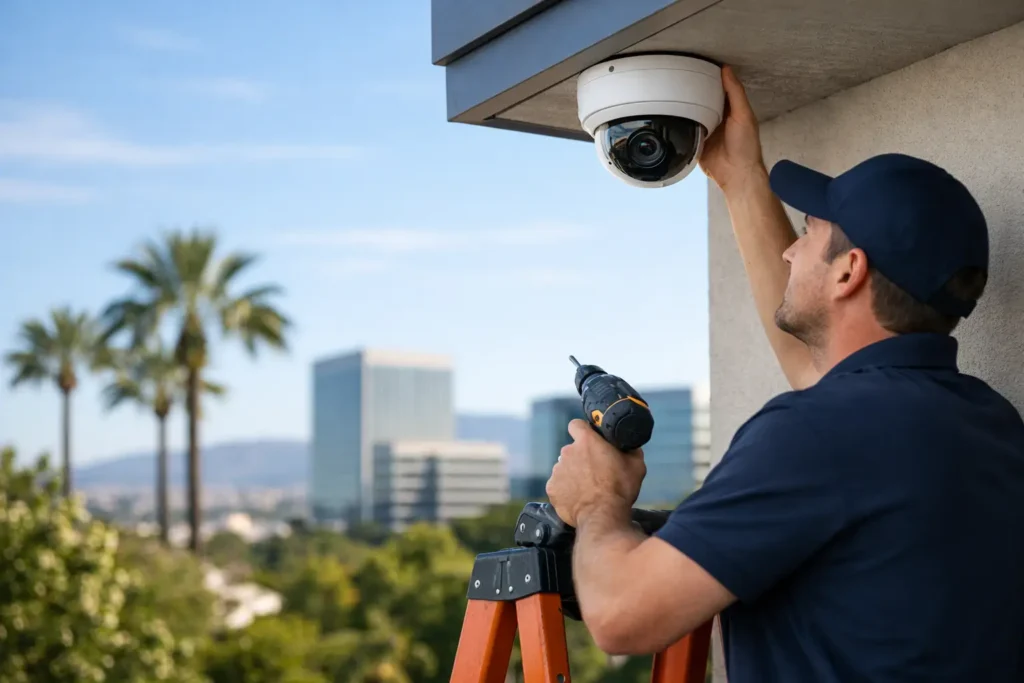
A camera over the garage and one at the front door might sound like enough – until you miss the side gate, the package drop zone, or the dark corner where motion alerts never trigger. Irvine security camera installation works best when it is planned around how you actually use your home or business, not just where a few cameras can be mounted quickly.
That difference matters more than most people expect. A good system gives you useful video, dependable alerts, and clean installation that does not make your property look patched together. A rushed setup often gives you the opposite – blind spots, false notifications, messy wiring, and footage that is too grainy to help when you need it.
What good Irvine security camera installation really involves
Security cameras are easy to shop for and much harder to install well. The camera itself is only one part of the job. Placement, viewing angle, wiring path, network strength, storage setup, app configuration, and night visibility all affect whether the system is actually useful day to day.
For homeowners, that usually starts with a practical question: what are you trying to watch? Some people want to monitor entries, driveways, side yards, and pool access. Others care most about deliveries, detached garages, or seeing who approaches the front door before opening it. Small business owners may need coverage at entrances, checkout areas, parking lots, or inventory spaces. The right layout depends on those priorities.
A professionally planned installation also accounts for how the property looks and functions. Cameras should cover key areas without feeling randomly placed. Wiring should be concealed whenever possible. Equipment should be mounted securely and positioned for clear video instead of dramatic but useless wide shots.
Camera placement is where most systems succeed or fail
Many camera problems come down to poor placement, not bad equipment. A camera that points directly into afternoon sun may wash out important details. One mounted too high can show the top of someones head but not a recognizable face. One aimed too wide may cover a large area while missing the detail needed to identify a person, vehicle, or event.
That is why installation should start with sightlines, lighting conditions, and likely approach paths. Front doors need a different angle than driveways. Side yards often need tighter views because fencing, landscaping, and narrow passageways create shadows and motion triggers. Backyards can be surprisingly tricky because patios, outdoor TVs, lighting, and reflective surfaces all affect image quality at night.
For larger homes, coverage usually needs to balance broad visibility with detail. One camera may show movement at the edge of a property, while another captures facial features near the entry point. More cameras are not always better. Better placement is better.
Wired, wireless, and what makes sense for your property
This is one of those areas where the honest answer is: it depends. Wireless cameras can work well in the right environment, especially when installation flexibility matters. But wireless does not mean maintenance-free. Battery charging, signal drops, and inconsistent performance can become frustrating fast, particularly on larger properties or in locations far from strong WiFi.
Wired systems usually offer more consistent power and reliability. They are often a better fit for homeowners who want stable recording, stronger long-term performance, and less day-to-day upkeep. They also tend to make more sense for small businesses where continuous operation matters.
The trade-off is installation complexity. Running low-voltage wiring through finished walls, attics, exterior pathways, or multi-story spaces takes planning and experience. Done correctly, though, it gives you a cleaner and more dependable result. That is often worth it for customers who care about both appearance and performance.
Why your network matters as much as your cameras
A lot of camera complaints are actually WiFi problems. If your cameras buffer, disconnect, or send delayed notifications, the issue may not be the camera brand at all. It may be weak coverage, overloaded access points, or poor signal at the exact location where the camera was installed.
That is especially common in larger homes with thick walls, outdoor mounting locations, detached structures, or a heavy mix of smart devices. Video doorbells, streaming boxes, phones, tablets, smart TVs, and work-from-home devices all compete for network capacity. Add multiple security cameras and weak spots become obvious.
A proper camera installation should include a realistic look at your network. In some homes, the existing WiFi is fine. In others, coverage needs to be upgraded before cameras can perform reliably. It makes little sense to install a security system on top of a network that is already struggling.
Storage, remote access, and alerts
People usually want three things from a security camera system: easy live viewing, reliable playback, and alerts that are worth paying attention to. Getting all three takes some setup.
Cloud storage may be convenient, but recurring fees add up. Local recording can provide more control and often better value over time, though it may require dedicated hardware and a little more planning. Some households prefer a hybrid setup to balance convenience and redundancy.
Alerts are another area where thoughtful setup matters. If every passing car, shadow, or tree branch triggers a notification, most people start ignoring the app. Activity zones, sensitivity settings, and smart detection features can help, but they need to be configured based on the property. The goal is not more alerts. The goal is better ones.
Clean installation matters more than people think
For many Irvine homeowners, the look of the finished job matters almost as much as the cameras themselves. That is reasonable. No one wants exposed cabling stapled across stucco, crooked mounts near the entry, or hardware that looks like an afterthought on a well-kept home.
Professional installation should respect the property. That means thoughtful cable routing, discreet equipment placement, secure mounting, and a system layout that feels intentional. It also means matching the installation to how the home is used. A camera should improve peace of mind without turning a beautiful exterior into a utility wall.
This is one reason many customers prefer to work with a specialized local installer rather than a big-box provider or a quick subcontracted crew. The difference often shows up in the details – cleaner finishes, better communication, and fewer compromises once the work begins.
Irvine security camera installation for homes and small businesses
Residential and small-business needs overlap, but they are not the same. A family may prioritize package protection, gate access, and visibility around outdoor living spaces. A business owner may need clear coverage at entry points, customer areas, equipment rooms, or parking access. The installation plan should reflect those differences.
For homes, privacy and ease of use often matter most. The system should be simple to check, easy to share with family members if needed, and reliable enough that you do not have to babysit it. Integration with other smart home features can also make sense when done carefully.
For small businesses, uptime and footage review tend to matter more. Owners may need stronger recording retention, defined user access, or better camera views for transactions and after-hours activity. In those cases, design choices should support operations, not just basic surveillance.
When to upgrade an existing system instead of replacing it
Not every project starts from scratch. Sometimes the cameras are fine, but the recorder is outdated. Sometimes the wiring is usable, but the image quality is poor. In other cases, the system works, but the app is frustrating or the alerts are unreliable.
A full replacement is not always necessary. Upgrading selected components can improve performance without rebuilding everything. On the other hand, patching an old system too many times can cost more in the long run. If the existing setup has repeated failures, poor resolution, or limited compatibility with newer devices, replacement may be the smarter move.
That is where experienced troubleshooting helps. A good installer should be able to tell you whether the current system can be improved or whether starting fresh will save time, money, and headaches.
The best security camera setup is the one that fits your property, your routine, and your expectations. It should be reliable when you are home, useful when you are away, and clean enough that it feels like part of the home rather than an add-on. If you are planning Irvine security camera installation, it pays to think beyond the cameras themselves and build the system around real-world performance.
Ready for a free consultation? Let’s get in touch! Call (949) 878-0531 Today