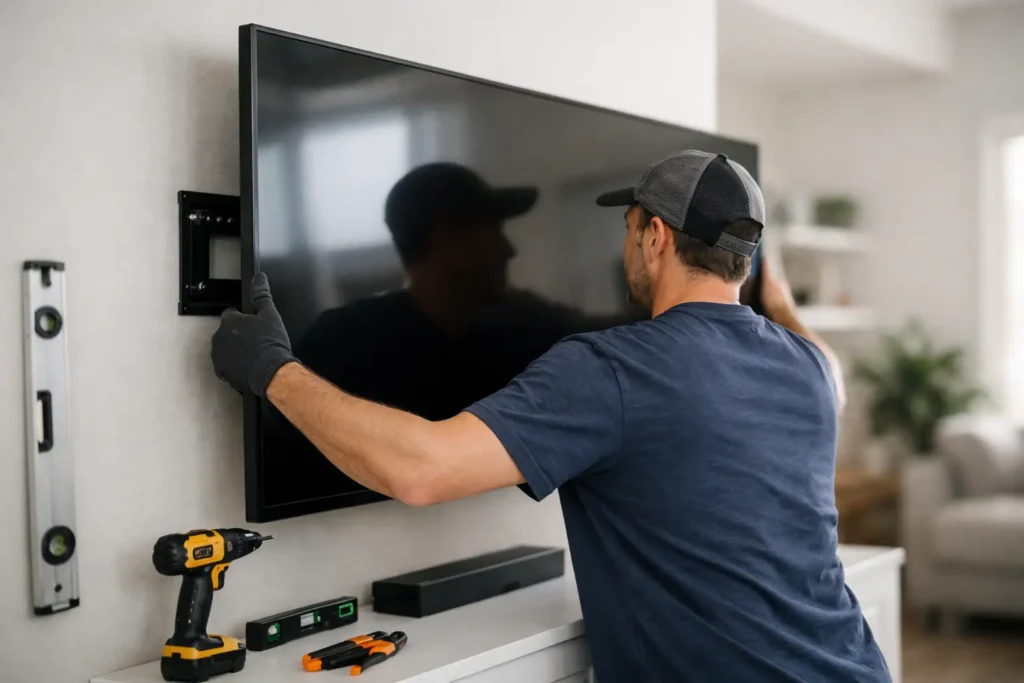
A 98-inch TV looks impressive right up until someone realizes it weighs well over 100 pounds, the wall is finished in clean drywall, and nobody is quite sure what is actually holding it up. That is where a lot of oversized TV projects go sideways. If you are figuring out how to mount oversized television properly, the real job is not just getting it on the wall. It is making sure the wall can support it, the viewing height feels comfortable, the wiring stays clean, and the installation still makes sense six months from now when you add a soundbar, game console, or upgraded streaming gear.
How to mount oversized television without costly mistakes
Large-format TVs are less forgiving than smaller displays. A bracket that is slightly off-center, a stud that is missed by half an inch, or a mount that is rated too close to the TV’s actual weight can create real problems. With a 75-inch set, you may get away with a marginal install. With an 85-inch, 98-inch, or larger model, every detail matters.
The first thing to check is not the TV. It is the wall. Standard wood-stud framing is often a good candidate, but even then, stud spacing, stud condition, and wall finish all matter. Metal studs, stacked stone, tile, fireplace facades, and older plaster walls each require a different approach. In many homes, the mounting surface looks solid but is really just decorative material over a less predictable structure.
That is why oversized TV mounting starts with load path and support, not aesthetics. The mount has to transfer weight into framing that can handle both the static load of the TV and the leverage created when the set sits proud of the wall or moves on an articulating arm.
Start with the mount, not the screen size
A common mistake is buying a bracket based only on the diagonal size listed on the TV box. Screen size matters, but weight, VESA pattern, and extension depth matter more. Some extra-large TVs fall within the size range of a mount but exceed the weight rating once accessories, adapters, or tilt hardware are added.
A fixed mount usually offers the strongest, cleanest install for a very large television. It keeps the display close to the wall and reduces leverage on the fasteners. A tilting mount can be useful if the TV must sit slightly higher, such as above low cabinetry or in a multi-use media room. Full-motion mounts are where caution really matters. They can be excellent when the room layout demands flexibility, but when an oversized TV is pulled out from the wall, the force on the studs increases significantly.
For many homeowners, the right answer depends on how the room is actually used. If the TV will stay in one viewing position, fixed or low-profile tilt is often the smarter choice. If there are multiple seating zones or glare issues that require regular adjustment, full-motion may be worth it, but only if the wall structure and mount rating support it comfortably, not barely.
Weight ratings should leave room for margin
You do not want a mount that is technically adequate. You want one that exceeds the load by a healthy margin. The same is true for lag bolts, anchors where appropriate, backer boards, and any adapters used for non-standard VESA patterns. Oversized TVs are not the place to cut it close.
The wall matters more than most people expect
If you want to know how to mount oversized television safely, the next step is confirming what is behind the wall. In newer homes, locating wood studs may be straightforward, but even then, centered placement can conflict with stud locations. In custom rooms, there may be blocking behind the drywall, but not always where you need it. Above fireplaces, things get more complicated. You may have stone veneer, brick, tile, or a framed chase with limited structural support exactly where you want the display.
This is where planning beats guesswork. Before drilling anything, confirm stud centers, check for electrical lines, inspect for plumbing where relevant, and measure the exact mounting height based on seated eye level. If cable concealment is part of the goal, now is also the time to decide whether in-wall power relocation, low-voltage pass-throughs, or external raceways make the most sense.
In high-end living rooms and media spaces, the clean look usually matters as much as the mount itself. A giant TV with exposed dangling cords rarely feels finished. At the same time, hiding cables improperly can create code and safety issues. Power and low-voltage lines should be handled correctly, especially on premium installations where the wall finish is worth protecting.
Height and placement can make a great TV feel awkward
Many oversized TVs are mounted too high. The reason is simple: people underestimate how much vertical space a very large screen occupies. What looked balanced on paper can feel like front-row seating once you are on the couch.
A good rule is to prioritize eye-level comfort for the primary seating position. In many family rooms, the center of the screen should land close to seated eye height, with some adjustment based on reclined seating, room depth, and screen size. Above-fireplace installs are popular, but they involve trade-offs. Sometimes the architecture leaves no better wall. Sometimes a mantel mount or drop-down solution helps. Sometimes the better answer is to use a different wall entirely.
That kind of judgment call is where experience matters. A TV can be perfectly secure and still feel wrong every time you watch it.
Plan for sound before the TV goes up
This gets missed all the time. If you are adding a soundbar, front speakers, or a full surround setup, the TV height and bracket position should account for that before installation. The same goes for media boxes, game consoles, and network connections. A large display often becomes the center of a broader AV system, and the mount should support that bigger picture.
Leaving room for a soundbar below the screen, making sure the IR path is clear, and giving access to HDMI ports can save a lot of frustration later. Some oversized TVs have side-facing ports, which is helpful. Others place connections in spots that become difficult to reach after mounting.
Precision matters more on larger displays
An oversized television exaggerates every small error. If the mount is out of level by even a little, you will see it. If the TV is off-center relative to the console or architectural focal point, the room will feel off. If the bracket is installed slightly too high, the viewing angle can become tiring over long movies or game sessions.
That is why professional installers spend time on layout, not just hardware. Measurements should reflect the exact TV dimensions, bezel edge, mount drop, wall centerline, and furniture placement. This is especially important in custom homes, remodels, and open-concept spaces where the TV is visible from more than one area.
For homeowners in Orange County, oversized TV installs are often part of a larger effort to keep living spaces clean, modern, and easy to use. That can mean recessing boxes, concealing wires, integrating streaming devices, improving WiFi near the entertainment area, or coordinating the display with in-ceiling audio. The mount itself may be only one piece of a more polished result.
When DIY makes sense and when it really does not
There are cases where a confident DIYer can mount a large TV successfully. If the wall has clear wood studs, the mount is high quality, the TV is manageable with enough help, and cable routing is simple, it may be doable. But oversized televisions reduce your margin for error in a hurry.
If the display is unusually heavy, if the wall finish is expensive, if the install is above a fireplace, if the bracket is articulating, or if you want hidden wiring and a clean finished look, professional installation is usually the better value. Not because the process is mysterious, but because the cost of getting it wrong is high. That can mean wall damage, a cracked screen, loose fasteners, bad viewing angles, or a setup that needs to be redone when you expand the system.
At Tri Star Home Theater, that is often where we step in – not only for new installs, but also to correct mounts that were placed too high, poorly supported, or never designed around the room’s actual use.
A properly mounted oversized TV should feel effortless once it is done. It should look centered, sit at the right height, sound good with the rest of the system, and stay secure for years. If you are investing in a large display, the install should match the equipment.
Ready for a free consultation? Let’s get in touch! Call (949) 878-0531 Today