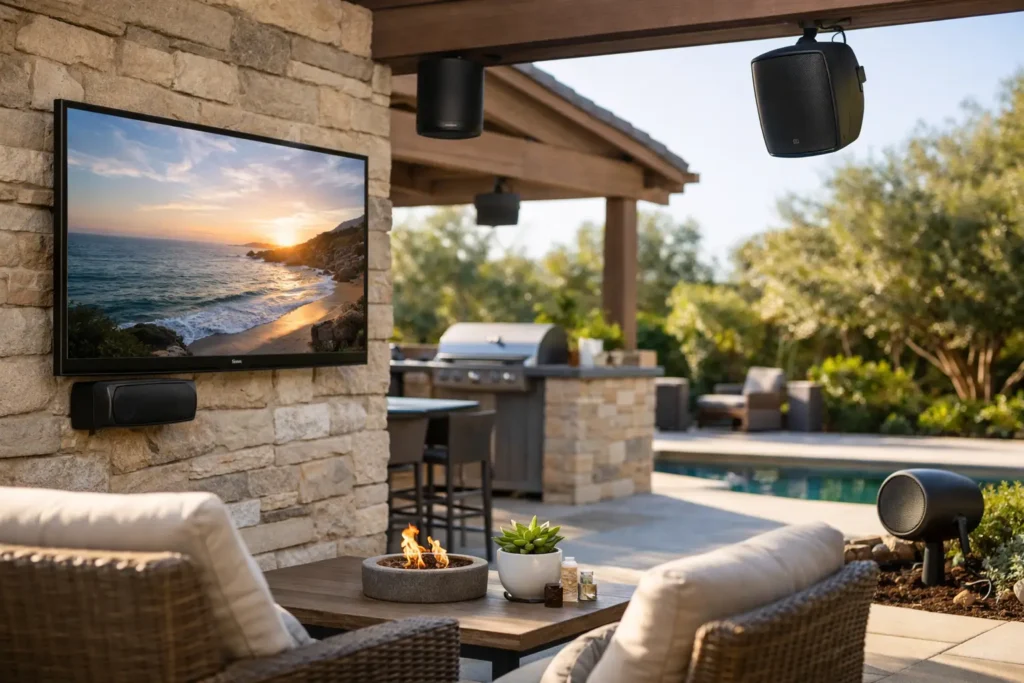
A backyard TV that washes out in the afternoon sun or speakers that disappear the moment the grill gets loud can turn a great idea into a frustrating one fast. Outdoor tv and speaker installation works best when it is treated as a system, not just a TV on the wall and a pair of speakers under the eaves. The right setup has to handle weather, glare, distance, connectivity, and how people actually use the space.
For some homes, that means a simple patio TV with two well-placed speakers and a clean remote setup. For others, it means a full outdoor entertainment area with distributed audio, strong WiFi, hidden wiring, and smart control. The difference is usually in the planning.
What makes outdoor TV and speaker installation different
Indoor AV rules do not carry over perfectly once you move outside. Sunlight changes picture quality. Open air affects how sound carries. Moisture, heat, salt air, and temperature swings all put stress on equipment and connections.
That is why outdoor installations need more than good-looking gear. They need the right mounting surfaces, weather-rated components, thoughtful cable paths, and enough power and network stability to keep everything running consistently. A setup that feels fine for the first few weekends can start showing problems later if those details were skipped.
In coastal parts of Orange County, for example, corrosion can become part of the conversation sooner than many homeowners expect. Even covered patios are not truly indoor spaces. Hardware, connectors, and speaker placement all need to account for that.
Start with the space, not the screen size
A common mistake is choosing the TV first and designing everything else around it. In practice, the space should lead. The patio cover height, direction of the sun, seating layout, and nearby reflective surfaces all matter.
If your main viewing time is afternoon sports, glare control may matter more than screen size. If the space is used mostly in the evening for movies or casual entertaining, you have more flexibility. The same goes for speaker coverage. A compact seating area can sound great with a simple stereo pair, while a larger backyard kitchen and lounge area may need multiple zones so the volume does not have to be pushed too high in one spot.
This is also where aesthetics come in. Many homeowners want outdoor entertainment that feels integrated into the home rather than added as an afterthought. Mount placement, wire concealment, and equipment location make a big difference in that finished look.
Choosing the right TV for outdoor use
Not every television belongs outside, even in a covered area. Indoor TVs may work temporarily in mild conditions, but long-term exposure to humidity, heat, and debris can shorten lifespan and create reliability issues. Outdoor-rated displays are built for these conditions and generally offer brighter screens for daytime visibility.
That said, the right choice depends on where the TV is going. A fully shaded covered patio has different requirements than a partially exposed deck that catches direct afternoon light. In some cases, a weather-resistant outdoor model is the obvious answer. In others, a homeowner may need to balance budget, usage, and risk tolerance.
Mounting is just as important as the display itself. The bracket needs to support the TV securely on the actual wall material, not just look strong in the box. Articulating mounts can help with viewing angles, but they also add movement and exposure, so installation quality matters.
Brightness, glare, and viewing angles
Picture quality outdoors is often less about resolution and more about visibility. A high-end screen still disappoints if the image is constantly fighting sunlight. Placement under a patio cover, angle adjustment, and anti-glare considerations usually matter more than most buyers expect.
Before installation, it helps to think about when the space gets used most. Morning shade and late afternoon sun can create very different results in the same location.
Speaker placement matters more outside
Open air does not reinforce sound the way a room does. Indoors, walls help contain and reflect audio. Outdoors, sound disperses quickly, and that changes everything about speaker layout.
This is why bigger speakers or higher volume alone do not solve the problem. If the speakers are poorly placed, people close to them hear too much while everyone else hears too little. A better approach is usually even coverage across the listening area.
For a covered patio, mounted weather-rated speakers under the eaves often work well. For larger yards, landscape speakers and buried subwoofers may create a more balanced result with less visible equipment. If the outdoor area includes dining, lounging, and pool zones, separate audio zones may be worth considering so each area can be controlled appropriately.
Outdoor TV and speaker installation for entertaining
When homeowners ask for outdoor tv and speaker installation, they are usually thinking beyond movie night. They want a system that works during parties, family gatherings, game days, and casual evenings outside. That means speech clarity matters just as much as bass, and coverage matters just as much as volume.
A setup designed for entertaining should sound full at moderate levels. If guests have to shout over the audio, the system is working against the space instead of supporting it.
Wiring, power, and weather protection
The cleanest outdoor installations are usually the ones with the most planning behind them. Power, HDMI paths, speaker wire, networking, and control wiring all need to be routed with weather exposure in mind.
Outdoor-rated cabling, proper conduit where needed, protected terminations, and code-conscious power access all help prevent the small failures that become expensive service calls later. Loose connections, exposed cable runs, and makeshift power solutions tend to show their weaknesses after heat, moisture, and regular use.
This is also where professional cable concealment adds value. Homeowners investing in a patio or backyard upgrade usually do not want to see dangling wires or surface-mounted shortcuts. A neat installation does more than look better. It protects the system.
Don’t overlook WiFi and streaming reliability
A surprising number of outdoor entertainment issues are not caused by the TV or speakers at all. They come from weak WiFi at the patio, overloaded networks, or streaming devices installed too far from a stable signal.
If the backyard is a dead zone, even a great outdoor system will feel unreliable. Buffering during a game or dropped audio during a movie can make the entire installation feel poor, even when the hardware is solid. In many homes, outdoor AV should be planned together with WiFi improvements so the system performs the way people expect.
For some properties, that means adding access points or adjusting network design rather than simply hoping the indoor router reaches outside.
Control should be simple
The best outdoor systems are easy to use. That sounds obvious, but it is often missed. If it takes three remotes, multiple apps, and a long startup process to turn on the patio TV and speakers, the system will not get used as often as it should.
Good outdoor control usually means simplifying the experience. Maybe that is a programmed remote. Maybe it is app-based control tied into the rest of the home. Maybe it is a straightforward input and audio setup that does not confuse guests or family members.
What matters is that the technology supports the lifestyle. A family should be able to walk outside, turn on the game, adjust the sound, and enjoy the space without troubleshooting.
When a custom installation is worth it
There are basic setups that can be done with off-the-shelf products and minimal integration. There are also projects where custom design saves money and frustration in the long run. Larger patios, remodels, outdoor kitchens, pool areas, and homes with existing AV systems usually benefit from a more tailored approach.
That is especially true when aesthetics, reliability, and long-term serviceability matter. A local specialist can look at sun exposure, mounting surfaces, wiring paths, speaker coverage, and control options before anything gets installed. That usually leads to better equipment choices and fewer compromises later.
For homeowners in Newport Beach and nearby Orange County communities, outdoor conditions are part of the equation. Salt air, custom architecture, and high expectations for finish quality all make experience matter.
Tri Star Home Theater approaches these projects with that bigger picture in mind – not just getting equipment mounted, but making sure the system fits the home and works the way it should over time.
A well-planned outdoor entertainment setup should feel easy once it is done. You should notice the game, the music, and the company around you, not the glare, the dead spots, or the cables that should have been hidden. Ready for a free consultation? Let’s get in touch! Call (949) 878-0531 Today