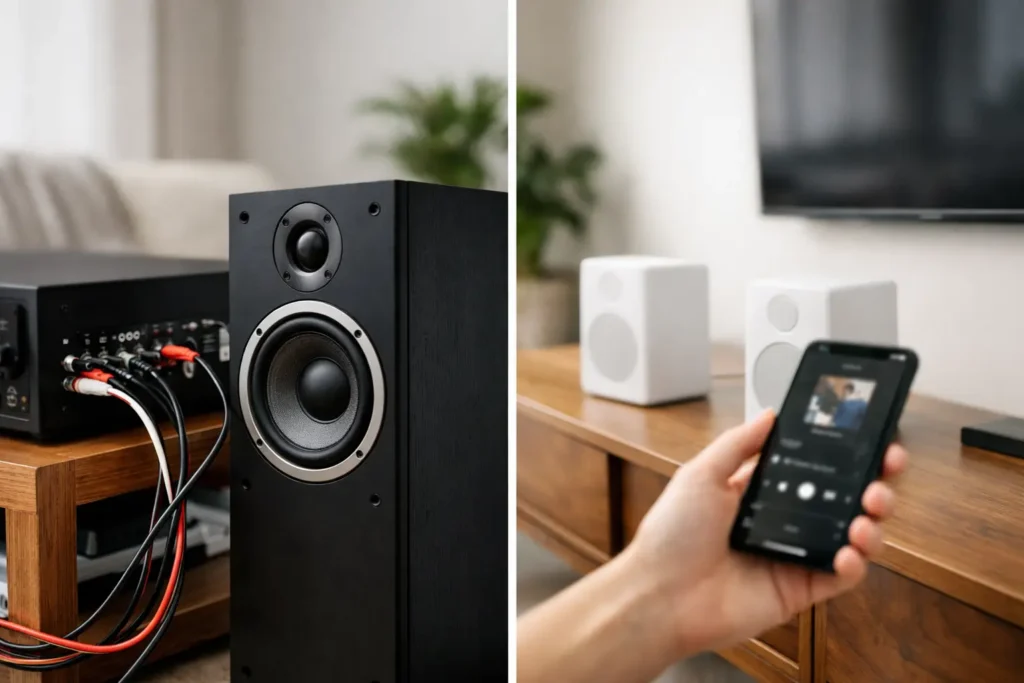
A ceiling speaker that disappears into the room, a soundbar that starts playing with one tap, and music that follows you from the kitchen to the patio can all feel equally modern. The real choice in wired vs wireless home audio is not about choosing old technology or new technology. It is about choosing the right balance of performance, appearance, flexibility, and long-term reliability for the way your home is used.
For some Newport Beach and Orange County homeowners, wired speakers are the clear answer because the home is being built or remodeled and the walls are already open. For others, a wireless system delivers excellent everyday listening without opening drywall or running cable through finished spaces. The strongest systems often combine both approaches.
Wired vs Wireless Home Audio: The Practical Difference
A wired audio system sends sound through physical speaker wire, usually from an AV receiver, amplifier, or centralized audio rack. The speakers may be placed in walls, ceilings, bookshelves, outdoor areas, or a dedicated theater room. Depending on the equipment, sources such as streaming services, TV audio, turntables, and cable boxes can all feed the system.
Wireless home audio uses WiFi, Bluetooth, or a proprietary wireless connection to deliver music and television sound to compatible speakers. Many wireless speakers still need a power outlet, so “wireless” usually means no speaker cable is required between the source and the speaker. A soundbar with a wireless subwoofer is a common example. Multi-room platforms can also let each room play different music or keep the whole house synchronized.
Neither category is automatically better. A basic wired setup can sound disappointing if it is poorly designed, while a well-configured wireless system can be convenient, stable, and very satisfying. The key is matching the system to the room, the existing infrastructure, and your expectations.
When Wired Audio Makes the Most Sense
Wired speakers remain the preferred foundation for a dedicated home theater, a serious media room, and permanent whole-home audio installations. A physical connection provides dependable signal delivery and avoids relying on wireless bandwidth for every speaker in the system. That matters most when the system includes surround sound, Dolby Atmos height channels, multiple subwoofers, or speakers spread across a large property.
Sound quality is another advantage. With a properly selected amplifier and correctly placed speakers, wired systems offer a wide dynamic range, clear dialogue, and strong bass response. In a theater, the difference is not simply volume. It is the ability to hear quiet details, understand dialogue during busy scenes, and feel impact without the sound becoming harsh or muddy.
Wired systems are also easier to tailor. An installer can select speakers based on room size, ceiling height, listening position, furnishings, and architectural restrictions. In-ceiling speakers can provide clean distributed music in a kitchen or great room. In-wall speakers can preserve a polished appearance around a television. Freestanding speakers may be the better option when two-channel music listening is a priority.
The trade-off is installation work. Speaker wire needs a route, and the best time to run it is before drywall is installed or while a remodel is underway. Finished homes can still be wired successfully, but access through attics, crawl spaces, cabinets, and carefully planned wall openings affects the project scope. Quality installation means more than hiding wire. It also means using appropriate cable, placing speakers correctly, labeling connections, and making future service manageable.
Wired Audio Is a Strong Fit for These Projects
Wired audio is especially worthwhile for a dedicated theater, a large open-concept space, a home with pre-wire already in place, or an outdoor entertainment area where speakers will remain in fixed locations. It is also a smart choice for homeowners who prefer a system that works the same way every time, even when the household WiFi network is busy.
Where Wireless Audio Shines
Wireless home audio is often the best answer when convenience and minimal disruption matter most. A homeowner can add sound to a bedroom, office, guest house, patio, or finished living room without making speaker-wire routing the center of the project. The system can be expanded room by room rather than built all at once.
This flexibility is valuable in homes where furniture changes frequently or where the audio needs may evolve. You may start with a TV soundbar and subwoofer, then add rear speakers for a more immersive movie experience. Later, you can add a speaker in the kitchen or outdoor area for music. For many families, app-based control and voice control also make wireless audio easier to use than a traditional receiver with multiple remotes.
Wireless multi-room systems are particularly practical for casual music listening. They allow a homeowner to group rooms for entertaining, adjust volume independently, and choose music from a phone or tablet. When designed around a strong network, the experience can feel simple for every member of the household.
The limiting factor is usually WiFi. Large homes, dense construction materials, outdoor zones, and a growing number of smart devices can expose weak coverage quickly. A speaker may be technically wireless, but it cannot perform well if it repeatedly loses connection or falls out of sync with other rooms. Before installing several wireless components, it is worth evaluating router placement, access points, network capacity, and signal coverage where the speakers will actually be used.
Bluetooth is useful for a single portable speaker or a simple temporary connection, but it is rarely the best backbone for a whole-home audio plan. Its range is limited, and it does not offer the same multi-room control or stability as a properly configured WiFi-based platform.
Sound Quality: What You Will Actually Hear
For background music at normal volumes, high-quality wireless speakers can sound excellent. They are often tuned to deliver strong bass and clear vocals from compact cabinets, which makes them a practical choice for kitchens, bedrooms, and smaller living spaces.
For critical music listening or cinematic surround sound, wired systems usually offer more headroom and more options. Separate speakers can be positioned for a true stereo image or accurate surround effects. Larger speakers and dedicated subwoofers can move more air, which helps a room feel fuller without forcing the system to work at its limit.
Room acoustics matter just as much as the technology. A large room with hard floors, glass walls, and high ceilings can create echo and reduce clarity. A carefully placed soundbar may outperform poorly located ceiling speakers for television dialogue. Likewise, ceiling speakers are excellent for distributed music but are not always ideal as the main front speakers in a movie-focused theater. Good design starts with how the room sounds and how people sit in it, not with a product box.
The Best Answer Is Often a Hybrid System
Many homes benefit from using wired and wireless audio together. A theater can use wired front, center, surround, and Atmos speakers for dependable performance, while wireless speakers provide flexible music in bedrooms or less frequently used areas. A wired outdoor speaker system can offer coverage across a patio and pool area, while a portable wireless speaker can handle a small gathering away from the main entertaining zone.
Another common hybrid approach is to use a wired soundbar connection to the television while relying on a wireless subwoofer and wireless rear speakers. This reduces visible cabling without compromising the primary connection that carries TV sound. The right design depends on the equipment, room layout, and whether wireless components are intended to be permanent or easily movable.
Planning Before You Buy Saves Time Later
Before choosing equipment, think through what you want the system to do on an ordinary weekday and during a full house. Do you mainly want clearer TV dialogue? Are you building a theater for movies, gaming, and sports? Do you want the same playlist in the kitchen, dining room, patio, and pool area? Will the system need to work for guests without a complicated explanation?
Also consider power, storage, and control. Wireless speakers need accessible outlets. Wired systems need a sensible location for amplifiers and receivers, with ventilation and room for service. A clean installation should keep cables concealed where appropriate while preserving access to the components that may need adjustment or replacement later.
For remodels and new construction, low-voltage pre-wiring is one of the best investments a homeowner can make. Even if every room does not receive speakers immediately, running wire and conduit while walls are open preserves options. It can prevent a future upgrade from becoming a much larger construction project.
Tri Star Home Theater helps homeowners evaluate these decisions based on the actual room, existing wiring, network performance, and budget. The goal is not to sell more equipment than you need. It is to create an audio system that looks clean, sounds right, and remains easy to use after installation day.
A good home audio system should disappear into your routine: clear sound for family movie night, music where you want it, and controls that do not require a troubleshooting session. Start with the experience you want, then choose the wired, wireless, or hybrid path that supports it.
Ready for a free consultation? Let’s get in touch! Call (949) 878-0531 Today