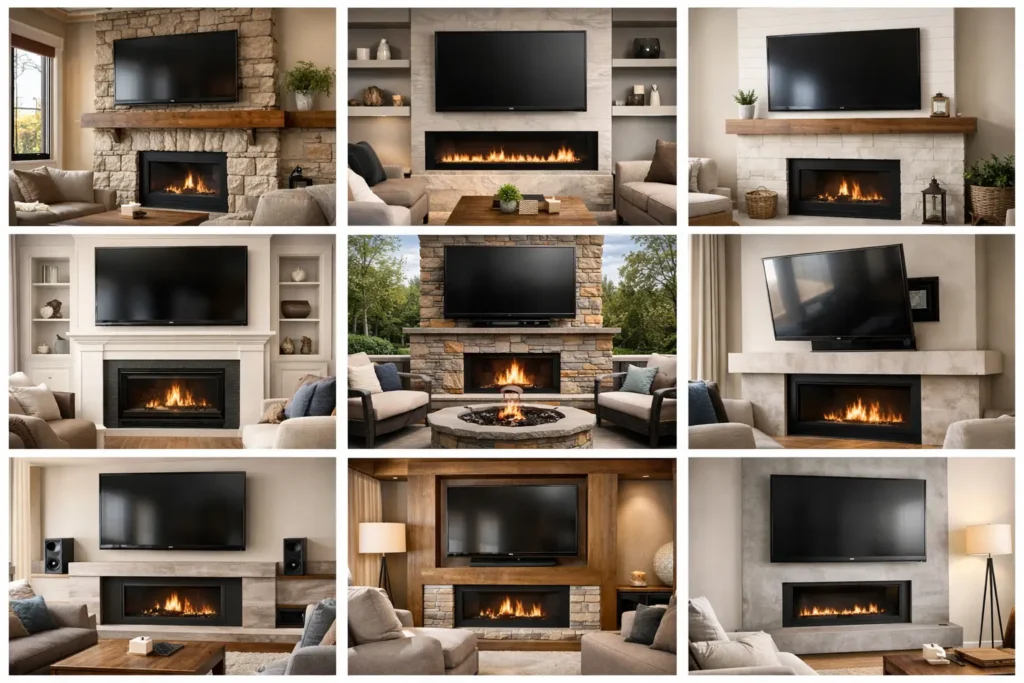
A TV over the fireplace can look clean and architectural, or it can become the one spot in the room nobody enjoys watching. That is why the best above fireplace tv mounting ideas start with comfort, heat, and viewing angles before style. When those pieces are handled correctly, the setup can feel intentional instead of forced.
In a lot of Southern California homes, the fireplace is still the visual center of the living room, even if the family spends more time streaming than lighting logs. That creates a common design challenge: you want the room to look polished, but you also want the TV at a height that feels natural for everyday use. The right answer depends on the fireplace type, mantel depth, room layout, and how serious you are about picture and sound quality.
Above fireplace TV mounting ideas that actually work
The simplest idea is not always the cheapest mount. In many homes, the smartest choice is a setup that visually centers the TV while bringing the screen lower when people are actually watching it. A fixed mount can work if the fireplace is low and the mantel is shallow, but many fireplaces place the screen too high for comfortable viewing during a full movie or long game.
That is where a pull-down mount often earns its keep. It lets the TV sit neatly above the fireplace when not in use, then drop to a better eye level for viewing. For homeowners who care about both aesthetics and comfort, this is often the best compromise. It is especially useful in formal living rooms, open-concept spaces, and remodeled homes where furniture placement is limited.
Another strong option is recessing the TV into a wall niche above the fireplace. This can reduce how far the screen projects into the room and create a more built-in look. It only works when wall depth, framing, and heat conditions allow for it, so it usually makes the most sense during a remodel or new construction. Done well, it gives the whole wall a custom finish rather than the look of an added-on screen.
If your fireplace wall is very tall, consider pairing the TV with surrounding millwork, stonework, or paneling so the screen feels proportionate to the space. A large blank wall can make even an 85-inch TV look oddly undersized. The mounting idea here is less about the bracket and more about visual balance. In higher-end homes, that design detail matters just as much as the technology.
Start with heat, not the mount
Before picking hardware, you need to know how much heat reaches the area above the fireplace. This is the first point many homeowners miss. Electric fireplaces tend to be easier to work with because many direct heat forward or allow flexible heat settings. Traditional wood-burning and some gas fireplaces can create far more heat above the opening, especially if the mantel is decorative rather than protective.
A quick hand test while the fireplace is running is not enough. Surface temperature should be checked after the fireplace has been on long enough to fully warm the wall. If the area where the TV will sit becomes too hot to comfortably hold your hand against for several seconds, that is a warning sign. Electronics and repeated heat exposure do not mix well, even if the TV seems fine at first.
A deeper mantel can help deflect rising heat, but not every mantel actually does the job. Some look substantial without projecting far enough to matter. If heat is borderline, a different mounting location may be the better long-term decision. Good installation is not just getting the TV on the wall. It is avoiding a placement that shortens the life of the equipment.
Viewing angle matters more than most people expect
A TV mounted above a fireplace is almost always higher than ideal. The question is whether it is slightly high or uncomfortably high. If you mostly watch casually from a kitchen island, occasional chairs, or a sectional with upright seating, a higher placement may be perfectly acceptable. If this is your main movie-watching room and you spend hours on the couch, neck strain becomes a real issue.
That is why some of the best above fireplace TV mounting ideas involve changing how the TV moves, not just where it sits. A tilting mount can help reduce glare and improve the angle, but it does not solve excessive height on its own. A pull-down mount is more effective when the screen starts too high. It brings the center of the TV closer to seated eye level and usually makes the room more comfortable for everyday watching.
Screen size also changes the equation. A larger TV mounted high can actually feel better than a smaller TV mounted high, because the picture occupies more of your natural field of view. That said, going too large in a compact room can create its own problems. The right fit depends on viewing distance, seating height, and how far down the mount can position the screen.
Plan for sound at the same time
One of the biggest mistakes with fireplace TV installs is treating audio as an afterthought. Once the TV is mounted, homeowners realize there is no clean place for a soundbar, no pathway for speaker wire, or no power where it needs to be. The result is often visible cords or a weak audio setup that does not match the room.
If you want a soundbar, leave proper spacing below the TV and above the mantel. Too tight, and the installation feels cramped. Too high, and dialogue seems disconnected from the screen. In some rooms, a mounted soundbar beneath the TV works well. In others, in-wall or architectural speakers create a cleaner solution, especially if the fireplace wall is already designed as a feature wall.
For homeowners who want surround sound or Dolby Atmos, the TV position should be coordinated with the entire room layout. A fireplace-centered wall can still be part of a strong home entertainment setup, but it takes planning. Speaker placement, subwoofer location, equipment storage, and cable routing all need to work together.
Hide the wires the right way
Clean cable concealment is what separates a professional-looking install from a temporary one. Over a fireplace, this can get complicated quickly because the wall may contain brick, stone, tile, framing obstacles, or a chimney chase. There is also a difference between simply covering wires and routing them safely to code.
In painted drywall above a modern gas fireplace, in-wall concealment may be fairly straightforward. On masonry or stone, the process is usually more involved and may require a surface raceway, strategic paint matching, or routing through adjacent cabinetry. None of these options are wrong. The best choice is the one that keeps the wall looking finished without creating service headaches later.
Power placement matters too. Extension cords should not be hidden inside walls. If the outlet is in the wrong spot, it should be corrected properly. This is one of those details that homeowners rarely think about until they see cords hanging beside a beautiful fireplace surround.
Match the mount to the wall material
Not every fireplace wall is equally mount-friendly. Drywall over wood studs is one thing. Stacked stone, tile over cement board, brick, and specialty surfaces require a different approach. The right anchors, fasteners, drilling method, and mount depth all matter. So does knowing what is behind the finish material.
This is especially true with heavier TVs. Large screens place serious load on the wall, and a mount is only as strong as the structure supporting it. A fireplace install may also involve irregular surfaces, uneven stone, or limited stud access. In those situations, a mount that looks good on paper may not be the best real-world option.
For higher-end living spaces in areas like Newport Beach or Irvine, homeowners often want the TV centered perfectly within custom stonework or millwork. Precision matters there. A screen that is even slightly off can stand out immediately.
When above the fireplace is not the best idea
Sometimes the best advice is to choose a different wall. If the fireplace is too tall, throws too much heat, or forces a poor viewing angle, keeping the TV elsewhere may lead to a better room overall. That is not a design failure. It is good system planning.
You can still keep the fireplace as the visual anchor and place the TV on a nearby wall, inside built-ins, or on a motorized concealed setup. For some families, that arrangement feels more relaxed and works better for daily use. Rooms should be built around how you actually live, not just around one photo-friendly angle.
At Tri Star Home Theater, this is often the difference between a setup that looks finished and one that keeps bothering you after installation. The right mount is part of the answer, but the real goal is a room that feels easy to use every day.
If you are considering a TV over the fireplace, slow down just enough to ask the right questions first. A little planning can save you from neck strain, heat problems, and a wall full of visible cables later.