Category: Uncategorized

  • 9 Above Fireplace TV Mounting Ideas

    9 Above Fireplace TV Mounting Ideas

    A TV over the fireplace can look clean and architectural, or it can become the one spot in the room nobody enjoys watching. That is why the best above fireplace tv mounting ideas start with comfort, heat, and viewing angles before style. When those pieces are handled correctly, the setup can feel intentional instead of forced.

    In a lot of Southern California homes, the fireplace is still the visual center of the living room, even if the family spends more time streaming than lighting logs. That creates a common design challenge: you want the room to look polished, but you also want the TV at a height that feels natural for everyday use. The right answer depends on the fireplace type, mantel depth, room layout, and how serious you are about picture and sound quality.

    Above fireplace TV mounting ideas that actually work

    The simplest idea is not always the cheapest mount. In many homes, the smartest choice is a setup that visually centers the TV while bringing the screen lower when people are actually watching it. A fixed mount can work if the fireplace is low and the mantel is shallow, but many fireplaces place the screen too high for comfortable viewing during a full movie or long game.

    That is where a pull-down mount often earns its keep. It lets the TV sit neatly above the fireplace when not in use, then drop to a better eye level for viewing. For homeowners who care about both aesthetics and comfort, this is often the best compromise. It is especially useful in formal living rooms, open-concept spaces, and remodeled homes where furniture placement is limited.

    Another strong option is recessing the TV into a wall niche above the fireplace. This can reduce how far the screen projects into the room and create a more built-in look. It only works when wall depth, framing, and heat conditions allow for it, so it usually makes the most sense during a remodel or new construction. Done well, it gives the whole wall a custom finish rather than the look of an added-on screen.

    If your fireplace wall is very tall, consider pairing the TV with surrounding millwork, stonework, or paneling so the screen feels proportionate to the space. A large blank wall can make even an 85-inch TV look oddly undersized. The mounting idea here is less about the bracket and more about visual balance. In higher-end homes, that design detail matters just as much as the technology.

    Start with heat, not the mount

    Before picking hardware, you need to know how much heat reaches the area above the fireplace. This is the first point many homeowners miss. Electric fireplaces tend to be easier to work with because many direct heat forward or allow flexible heat settings. Traditional wood-burning and some gas fireplaces can create far more heat above the opening, especially if the mantel is decorative rather than protective.

    A quick hand test while the fireplace is running is not enough. Surface temperature should be checked after the fireplace has been on long enough to fully warm the wall. If the area where the TV will sit becomes too hot to comfortably hold your hand against for several seconds, that is a warning sign. Electronics and repeated heat exposure do not mix well, even if the TV seems fine at first.

    A deeper mantel can help deflect rising heat, but not every mantel actually does the job. Some look substantial without projecting far enough to matter. If heat is borderline, a different mounting location may be the better long-term decision. Good installation is not just getting the TV on the wall. It is avoiding a placement that shortens the life of the equipment.

    Viewing angle matters more than most people expect

    A TV mounted above a fireplace is almost always higher than ideal. The question is whether it is slightly high or uncomfortably high. If you mostly watch casually from a kitchen island, occasional chairs, or a sectional with upright seating, a higher placement may be perfectly acceptable. If this is your main movie-watching room and you spend hours on the couch, neck strain becomes a real issue.

    That is why some of the best above fireplace TV mounting ideas involve changing how the TV moves, not just where it sits. A tilting mount can help reduce glare and improve the angle, but it does not solve excessive height on its own. A pull-down mount is more effective when the screen starts too high. It brings the center of the TV closer to seated eye level and usually makes the room more comfortable for everyday watching.

    Screen size also changes the equation. A larger TV mounted high can actually feel better than a smaller TV mounted high, because the picture occupies more of your natural field of view. That said, going too large in a compact room can create its own problems. The right fit depends on viewing distance, seating height, and how far down the mount can position the screen.

    Plan for sound at the same time

    One of the biggest mistakes with fireplace TV installs is treating audio as an afterthought. Once the TV is mounted, homeowners realize there is no clean place for a soundbar, no pathway for speaker wire, or no power where it needs to be. The result is often visible cords or a weak audio setup that does not match the room.

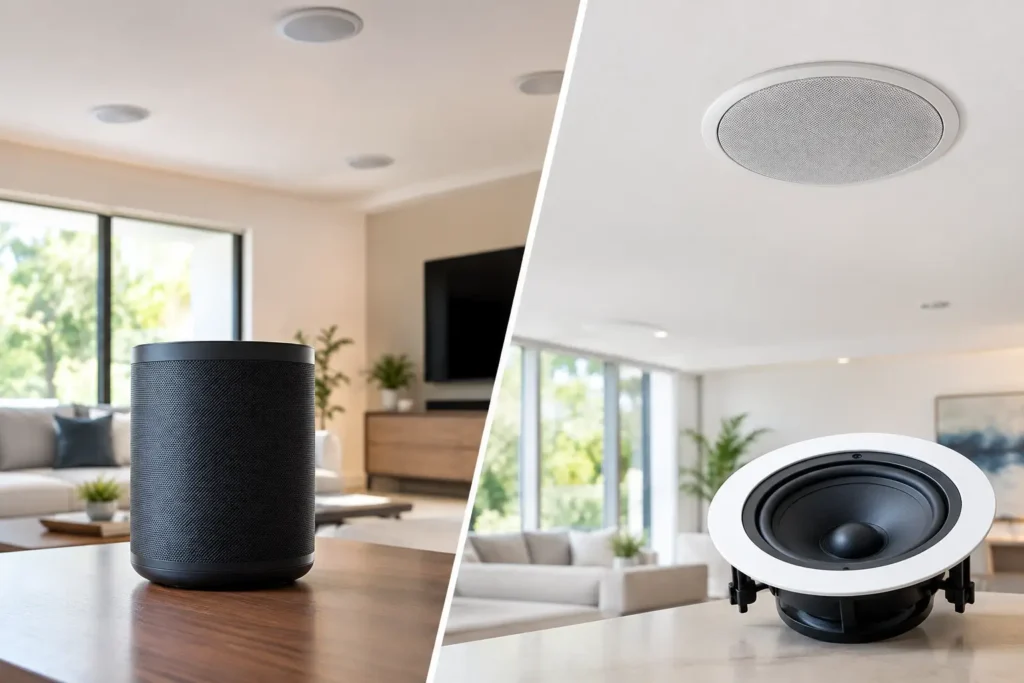
    If you want a soundbar, leave proper spacing below the TV and above the mantel. Too tight, and the installation feels cramped. Too high, and dialogue seems disconnected from the screen. In some rooms, a mounted soundbar beneath the TV works well. In others, in-wall or architectural speakers create a cleaner solution, especially if the fireplace wall is already designed as a feature wall.

    For homeowners who want surround sound or Dolby Atmos, the TV position should be coordinated with the entire room layout. A fireplace-centered wall can still be part of a strong home entertainment setup, but it takes planning. Speaker placement, subwoofer location, equipment storage, and cable routing all need to work together.

    Hide the wires the right way

    Clean cable concealment is what separates a professional-looking install from a temporary one. Over a fireplace, this can get complicated quickly because the wall may contain brick, stone, tile, framing obstacles, or a chimney chase. There is also a difference between simply covering wires and routing them safely to code.

    In painted drywall above a modern gas fireplace, in-wall concealment may be fairly straightforward. On masonry or stone, the process is usually more involved and may require a surface raceway, strategic paint matching, or routing through adjacent cabinetry. None of these options are wrong. The best choice is the one that keeps the wall looking finished without creating service headaches later.

    Power placement matters too. Extension cords should not be hidden inside walls. If the outlet is in the wrong spot, it should be corrected properly. This is one of those details that homeowners rarely think about until they see cords hanging beside a beautiful fireplace surround.

    Match the mount to the wall material

    Not every fireplace wall is equally mount-friendly. Drywall over wood studs is one thing. Stacked stone, tile over cement board, brick, and specialty surfaces require a different approach. The right anchors, fasteners, drilling method, and mount depth all matter. So does knowing what is behind the finish material.

    This is especially true with heavier TVs. Large screens place serious load on the wall, and a mount is only as strong as the structure supporting it. A fireplace install may also involve irregular surfaces, uneven stone, or limited stud access. In those situations, a mount that looks good on paper may not be the best real-world option.

    For higher-end living spaces in areas like Newport Beach or Irvine, homeowners often want the TV centered perfectly within custom stonework or millwork. Precision matters there. A screen that is even slightly off can stand out immediately.

    When above the fireplace is not the best idea

    Sometimes the best advice is to choose a different wall. If the fireplace is too tall, throws too much heat, or forces a poor viewing angle, keeping the TV elsewhere may lead to a better room overall. That is not a design failure. It is good system planning.

    You can still keep the fireplace as the visual anchor and place the TV on a nearby wall, inside built-ins, or on a motorized concealed setup. For some families, that arrangement feels more relaxed and works better for daily use. Rooms should be built around how you actually live, not just around one photo-friendly angle.

    At Tri Star Home Theater, this is often the difference between a setup that looks finished and one that keeps bothering you after installation. The right mount is part of the answer, but the real goal is a room that feels easy to use every day.

    If you are considering a TV over the fireplace, slow down just enough to ask the right questions first. A little planning can save you from neck strain, heat problems, and a wall full of visible cables later.

  • How to Choose Home Theater Installation Near Me

    How to Choose Home Theater Installation Near Me

    You usually know a home theater job is headed the wrong way when the TV is already on the wall and nobody has asked where the center speaker goes, how the room reflects sound, or whether your WiFi can actually handle 4K streaming. That is why a search for home theater installation near me should lead to more than a handyman with a drill. The right installer looks at the full experience – picture, sound, layout, lighting, wiring, control, and how your family will actually use the room.

    A good home theater is not just expensive gear in the same space. It is a system. In some homes that means a clean living room setup with a flush-mounted TV, hidden wiring, a soundbar, and streaming devices that work the first time. In others, it means a dedicated media room with surround sound, a projector, acoustic considerations, and simple one-touch control. The common thread is thoughtful planning.

    What people really mean by home theater installation near me

    Most homeowners are not just looking for someone to mount a screen. They are trying to solve a set of problems at once. They want better sound, cleaner wiring, dependable streaming, and equipment that works together without turning every movie night into a troubleshooting session.

    That is where local specialization matters. A true AV installer can evaluate the room, recommend the right speaker layout, determine whether a projector or large-format TV makes more sense, and spot issues a general contractor or retail installer may miss. Ceiling height, wall composition, seating distance, sunlight, existing pre-wire, and network strength all affect the final result.

    There is also the service side. If a remote stops controlling the system, an HDMI signal drops out, or a receiver needs to be reconfigured after an upgrade, it helps to have a local company that can come back and fix it. That kind of follow-through is often what separates a real home theater partner from a one-day installer.

    What to look for before you hire

    The first thing to ask is whether the company handles both design and installation. If they only install what you already bought, you may still be left guessing on speaker placement, component compatibility, or whether the room can support your goals. If they only sell equipment, you may end up with recommendations that fit inventory better than your home.

    You also want to know how broad their technical experience is. Home theater systems rarely live on their own anymore. They tie into WiFi, streaming platforms, universal remotes, smart lighting, voice control, security systems, and whole-home audio. A company that understands those connections can build a setup that feels simple instead of pieced together.

    Experience with repair and troubleshooting matters too. Plenty of companies are happy to install a brand-new system. Fewer are good at diagnosing lip-sync issues, HDMI handshakes, weak wireless coverage, speaker imbalance, or a projector that suddenly looks dim. An installer who also handles service work tends to design more carefully from the start.

    The room should drive the plan

    One of the biggest mistakes in home theater work is forcing a standard package into a room that does not suit it. Open-concept great rooms, upstairs lofts, bonus rooms, bedrooms, and dedicated theaters all have different strengths and limits.

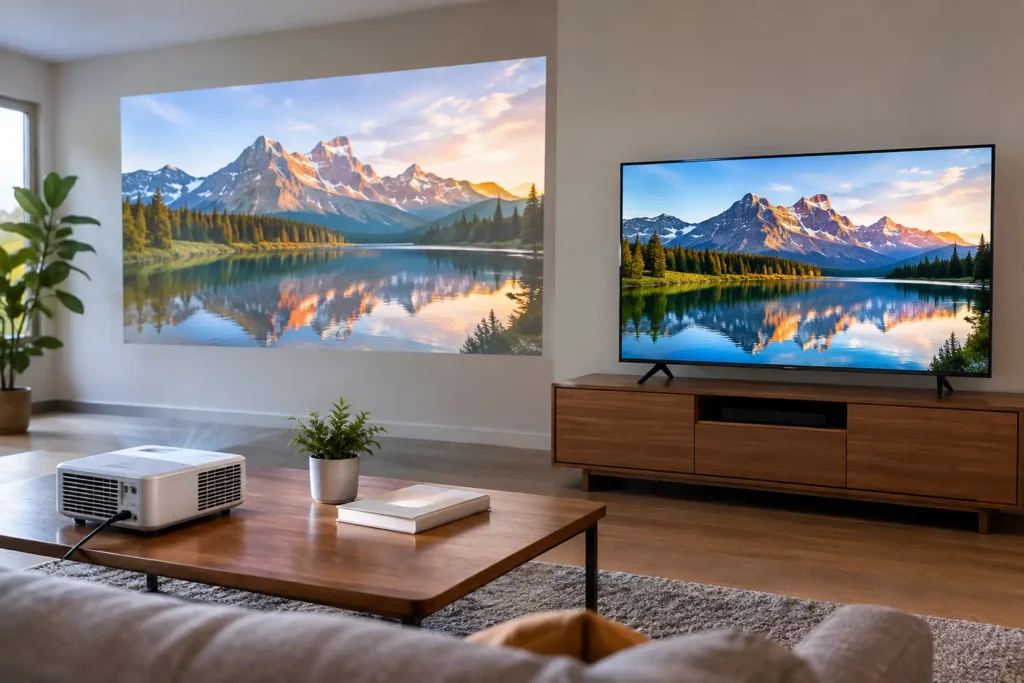
    In a bright family room, a high-quality TV is often the better choice than a projector. It handles daytime viewing better, usually requires less maintenance, and can still deliver an excellent cinematic feel when paired with the right audio. In a darker dedicated room, a projector and screen may create a more immersive result, especially if seating is planned around it.

    Speaker layout is just as dependent on the room. Dolby Atmos can be fantastic, but not every ceiling is ideal for in-ceiling channels, and not every client wants to cut into finished surfaces. Sometimes a well-tuned 5.1 or 5.1.2 setup outperforms a more ambitious layout installed in the wrong space. The best installers do not oversell channels. They match the design to the room and the way you listen.

    Clean installation is part of the value

    Homeowners in places like Newport Beach, Irvine, Costa Mesa, and Laguna Beach often care as much about appearance as performance, and rightly so. A theater setup should add to the room, not clutter it.

    That means cable concealment, properly mounted screens, equipment placed with ventilation in mind, and speakers that feel integrated rather than dropped in as an afterthought. It may also mean low-voltage pre-wiring during a remodel, recessed power solutions, or planning around millwork and interior finishes. These details affect whether the final installation looks custom or temporary.

    This is also where cheap labor can get expensive. A low quote may not include patching, wire management, proper mounting hardware, remote programming, or time spent fine-tuning the sound. On paper it looks like savings. In practice it often becomes a second job later.

    Why network performance matters more than most people expect

    Many theater complaints are not really theater problems. They are network problems. Buffering during 4K streaming, laggy smart TVs, whole-home audio dropouts, and control apps that fail intermittently often trace back to weak WiFi coverage, poor router placement, overloaded access points, or outdated hardware.

    That is why a competent installer should at least evaluate the network during the planning stage. If your theater depends on streaming devices, wireless speakers, app control, or smart home integration, the system is only as dependable as the connection behind it. Sometimes the fix is simple. Sometimes it calls for access point placement, hardwired connections, or a broader home network upgrade.

    For homeowners, this matters because it changes the conversation from Why does my movie keep buffering? to How do we build a system that works every day?

    Home theater installation near me is also about support after install

    A theater system is not frozen the day it is installed. TVs get replaced. Streaming devices change. Apps update. Family habits shift. You may start with a mounted TV and soundbar, then decide six months later that you want surround sound, outdoor speakers, or a universal remote that controls the entire room.

    That is why ongoing support matters. A local company can return for upgrades, expand what you already have, and help you avoid replacing components unnecessarily. In many cases, a system that feels outdated is actually just poorly configured.

    This is where family-owned service has a real advantage. You are not calling a national scheduling line and hoping the next available technician understands your setup. You are working with a local specialist whose reputation depends on showing up, solving the problem, and standing behind the work.

    When a simpler system is the smarter choice

    Not every home needs a full dedicated theater. Sometimes the best answer is a large TV, a premium soundbar with subwoofer, hidden cabling, and a clean control setup. For casual viewing, sports, streaming, and everyday family use, that can be the right call.

    There is no trophy for the most complicated system. More components mean more cost, more setup, and sometimes more maintenance. The right installer will explain the trade-offs clearly. If a room will not benefit enough from rear speakers, or if the family wants maximum ease of use over technical complexity, that should shape the recommendation.

    That kind of honesty saves money and leads to better long-term satisfaction. It also tends to be what clients remember.

    Choosing a local installer with the right mindset

    If you are comparing options, pay attention to how the conversation starts. A strong installer asks about the room, your goals, who uses the system, what equipment you already own, and what has not worked in the past. They should be comfortable handling new installs, upgrades, and repair issues, because real homes often involve some mix of all three.

    Tri Star Home Theater has built its work around that practical approach. The value is not just in getting a screen mounted or speakers connected. It is in designing a system that fits the home, looks clean, performs reliably, and can be supported when something changes later.

    When you search for home theater installation near me, the best result is not simply the closest company. It is the one that treats your project like a system, your house like a finished home, and your time like it matters. That is usually the difference between a setup that impresses for a weekend and one you still enjoy years from now.

    Ready for free consultation? Let’s get in touch! Call (949) 878-0531 Today

  • Home Cinema Design and Installation Tips

    Home Cinema Design and Installation Tips

    The difference between a theater room that gets used every weekend and one that turns into an expensive spare room usually comes down to planning. Home cinema design and installation is not just about buying a big screen and a few speakers. It is about making the room feel right, sound right, and work reliably every time someone sits down to watch a movie, a game, or a late-night series.

    For many homeowners, the hardest part is not choosing equipment. It is knowing what matters first. Room size, speaker placement, wiring paths, lighting, seating distance, and internet stability all affect the final result. Get those fundamentals right and the system feels effortless. Miss them, and even premium gear can feel disappointing.

    What good home cinema design and installation really involves

    A well-designed home cinema should match the way you live, not just the way a showroom looks. Some households want a dedicated dark theater with a projector, acoustic treatment, and tiered seating. Others want a family media room with a large TV, surround sound, hidden wiring, and simple one-remote control. Both can be excellent. The right answer depends on the room, the budget, and how the system will actually be used.

    That is why design comes before installation. Before anything is mounted or wired, it helps to answer a few practical questions. Will the room be used mainly for movies, sports, gaming, or all three? Will there be daytime viewing? Is the priority a projector screen experience or a bright, easy-to-use TV setup? Are you starting from scratch, remodeling, or upgrading an older system that already has some wiring in place?

    The best projects usually begin with those lifestyle questions, then move into technical planning. That approach prevents common mistakes, like choosing a projector for a room with too much natural light, mounting speakers where they look good but sound off, or skipping network upgrades that later create streaming issues.

    Start with the room, not the equipment

    Every room has limits and opportunities. Ceiling height affects projector placement and Dolby Atmos options. Wall construction affects speaker mounting and cable concealment. Window placement affects glare and picture quality. Flooring and furniture affect how sound behaves.

    A dedicated theater room gives you more control. You can plan darker finishes, reduce reflected light, and create a layout that supports immersive surround sound. A living room or bonus room needs a different mindset. In those spaces, the system often has to balance performance with aesthetics. Clean wiring, discreet speakers, attractive TV placement, and equipment storage become just as important as raw output.

    In Southern California homes, open floor plans are common, and they can be tricky for audio. Large connected spaces can make bass less consistent and reduce the impact of surround effects. That does not mean you cannot have a great room. It means the design needs to account for the space instead of forcing a cookie-cutter setup into it.

    Screen size and viewing distance

    Bigger is not always better. The best screen size depends on how far away people will sit and what kind of content they watch. A screen that is too small can feel underwhelming. One that is too large for the seating distance can become tiring, especially for everyday TV viewing.

    Projectors are a strong choice when you want a cinematic feel and have good light control. Large TVs are often the better fit for mixed-use spaces because they handle bright rooms well and need less maintenance. There is no universal winner here. It depends on the room and the expectations for image quality during the day and at night.

    Lighting makes or breaks the experience

    Lighting is one of the most overlooked parts of home cinema design and installation. Even a high-end display can look washed out if the room has glare from windows, recessed lights, or reflective surfaces. Layered lighting works best. You want enough light for entering the room, cleaning, or casual use, but not so much that it ruins movie viewing.

    Dimmer-controlled sconces, LED accent lighting, and blackout shades can make a dramatic difference. The goal is not to make the room dark at all times. It is to make light controllable.

    Audio is where the room becomes a theater

    People usually notice picture quality first, but sound is what makes a system feel immersive. Clear dialogue, convincing surround effects, and balanced bass create that theater experience at home. This is where placement matters as much as product choice.

    A soundbar can work well in a bedroom, office, or smaller family room. For a true cinema setup, a dedicated surround system is still the standard. Even then, there are choices. A 5.1 layout may be ideal for one room, while another may support 7.1 or Dolby Atmos with in-ceiling speakers. More speakers are not automatically better if the room cannot support proper spacing.

    Speaker placement should follow the seating layout, not just the architecture. If the main couch is pushed against the back wall, rear speaker placement becomes more complicated. If the room is very wide, the center channel has to be chosen carefully to keep dialogue anchored to the screen. If aesthetics are a concern, in-wall or in-ceiling options can help, but they need to be planned around framing, insulation, and wiring access.

    Subwoofer placement also deserves attention. Bass is heavily affected by the room. One corner may deliver strong output but uneven response. Another location may sound tighter and more balanced. This is one area where testing matters.

    Wiring, control, and connectivity are not side issues

    The best-looking theater rooms usually have one thing in common: you do not notice the infrastructure. Wires are hidden, equipment is organized, and the system is easy to operate. That does not happen by accident.

    Pre-wiring is ideal during construction or remodeling because it keeps options open for future upgrades. Even in finished homes, careful cable concealment can make a major difference in the final appearance. Just as important is planning where equipment will live. Some homeowners prefer everything behind the TV. Others want components in a cabinet or separate closet to reduce visible clutter and fan noise.

    Control is another area where good planning pays off. A home cinema should not require three remotes and a five-step startup routine. Integrated control, properly programmed remotes, and simple source switching make the room more enjoyable for everyone in the house.

    Then there is the network. Streaming is now central to most entertainment systems, yet WiFi is often treated as an afterthought. If the theater room has weak coverage, buffering and dropouts can ruin the experience. In some homes, a wired connection or upgraded wireless access point is the fix that matters most.

    Installation quality shows up later

    A clean installation is not just about appearance on day one. It affects long-term reliability, serviceability, and performance. Secure mounting, correct power management, proper ventilation, and accurate calibration all matter once the excitement of new equipment wears off.

    This is especially true with larger TVs, projectors, ceiling-mounted speakers, and integrated smart controls. Small installation shortcuts can become big frustrations later. A slightly off-center projector mount, a poorly ventilated cabinet, or a loose HDMI connection may not seem urgent at first, but those issues tend to show up when you are trying to enjoy the room, not troubleshoot it.

    Professional installation also helps when existing systems need to be improved rather than replaced. Many homeowners already have decent equipment but are not getting the most from it because of poor setup, bad wiring, outdated control programming, or speaker placement that was never optimized. In those cases, the upgrade may be more about correction than starting over.

    Budgeting for the right things

    A good theater budget should prioritize what is hardest to change later. Wiring, speaker locations, mounting, lighting control, and room preparation usually matter more than squeezing every last dollar into a single display or receiver.

    That does not mean premium equipment is not worth it. It means the room should be built as a system. In many homes, a balanced mid-to-high-end setup installed properly will outperform a more expensive collection of gear installed without a real plan.

    This is also why estimates should be specific. A meaningful proposal should account for labor, concealment, control setup, calibration, and any needed infrastructure like power, low-voltage wiring, or network improvement. The lowest number on paper is not always the better value if key pieces have been left out.

    For homeowners in areas like Newport Beach, Irvine, Costa Mesa, and Laguna Beach, design preferences often matter just as much as technical performance. The system has to complement the home. That may mean recessing a TV, minimizing exposed hardware, color-matching components, or integrating audio without changing the character of the room. A good installer respects that balance.

    The goal is a room you actually use

    The best home cinema is not the one with the most equipment. It is the one that works every time, looks like it belongs in the home, and makes people want to sit down and stay awhile. At Tri Star Home Theater, that is usually where the real value shows up – in the planning decisions that make the final system feel simple, comfortable, and built around the way the household lives.

    If you are thinking about a new theater room or upgrading an older setup, start with the room, the wiring, and the way you want the space to feel. The equipment can follow. When the foundation is right, movie night stops feeling like a project and starts feeling like the reason the room was built in the first place.

    Ready for free consultation? Let’s get in touch! Call (949) 878-0531 Today

  • 5.1 Home Theater Dolby Atmos Setup Guide

    5.1 Home Theater Dolby Atmos Setup Guide

    A lot of homeowners start with the same question: can a 5.1 home theater Dolby Atmos setup actually deliver that overhead, theater-style sound, or do you need a bigger and more expensive system to make it worth it? The short answer is that Atmos can sound excellent in a 5.1-based room, but only when the layout, speaker choice, wiring, and calibration are handled correctly. This is one of those projects where small placement mistakes can have a bigger impact than people expect.

    For many living rooms, media rooms, and multipurpose family spaces, a 5.1 Atmos system hits the practical sweet spot. It gives you front soundstage coverage, surround effects, a dedicated subwoofer channel, and added height information without requiring a full dedicated theater footprint. The catch is that Dolby Atmos is not just a label on the receiver box. It depends on geometry, room surfaces, seating position, and how the system is installed.

    What a 5.1 home theater Dolby Atmos setup really means

    A standard 5.1 system includes five ear-level speakers and one subwoofer. That usually means a left, center, and right speaker across the front, two surround speakers to the sides or slightly behind the listening area, and one powered subwoofer handling low frequencies.

    When people say Atmos with 5.1, they often mean either a 5.1.2 or 5.1.4 configuration. The first number is your ear-level speakers, the second is the subwoofer, and the third is the number of height channels. In real-world homes, 5.1.2 is the more common upgrade path because it adds two height speakers without turning the room into a major construction project.

    That distinction matters because a true Dolby Atmos experience needs height information. If your receiver says Atmos but you are only running five speakers and a subwoofer, you are not hearing the format the way it was designed. The added height layer is what creates the sense of sound moving above and around you.

    The best room types for this setup

    A 5.1 home theater Dolby Atmos setup works especially well in rooms where people want performance without giving up the room to equipment. That includes open-concept family rooms, bonus rooms, dens, and smaller dedicated theaters.

    Ceiling height plays a big role. Flat ceilings around 8 to 10 feet usually perform best, especially if you plan to use in-ceiling speakers or Atmos-enabled upward-firing modules. Vaulted or heavily angled ceilings can still work, but they reduce predictability. With bounce-style Atmos modules, the wrong ceiling shape can weaken the overhead effect enough that the upgrade feels minor.

    The seating position also matters more than many buyers realize. If the couch is pushed hard against the back wall, surround placement becomes tricky and the Atmos effect can feel less balanced. In those cases, a custom placement strategy often produces a better result than a standard diagram copied from a product manual.

    Choosing between in-ceiling and upward-firing Atmos speakers

    If you want the cleanest and most convincing height performance, in-ceiling speakers are usually the better choice. They give you direct overhead sound, they look integrated, and they avoid the limitations of relying on sound reflections. For homeowners who care about aesthetics, this is often the most polished option when the room and ceiling access allow for it.

    Upward-firing Atmos modules can still be a solid solution, especially in finished rooms where opening ceilings is not ideal. They sit on top of front or surround speakers and reflect sound off the ceiling toward the listener. When the ceiling is flat, not too high, and reasonably reflective, they can produce a noticeable Atmos effect. But there is no getting around the trade-off – reflected sound is usually less precise than direct overhead speakers.

    This is where a lot of systems go wrong. People buy Atmos-enabled speakers because the packaging makes the install look simple, but their ceiling is too high, too angled, or finished with materials that absorb too much sound. The result is a system that technically supports Atmos but does not deliver the impact they expected.

    Speaker placement matters more than speaker price

    You can spend generously on equipment and still end up with a disappointing room if the layout is off. In a 5.1 Atmos room, placement has to support both surround imaging and clear dialogue.

    Your left, center, and right speakers should anchor the screen area, with the center aimed clearly at the main seating position. That center channel is responsible for most dialogue, so hiding it in a cabinet or placing it too low often causes the biggest day-to-day frustration.

    Surround speakers should sit to the sides of the main listening area or slightly behind it, typically above ear level but not so high that they start competing with the height layer. The Atmos speakers should be positioned relative to the main seats, not just wherever there is open ceiling space. Good installers think in terms of listening angles, not just room symmetry.

    Subwoofer placement is another area where theory and reality often differ. A subwoofer in the wrong corner can create boomy bass in one seat and weak bass in another. Sometimes a room benefits from a front-corner location. Other times, moving the sub just a few feet changes the entire low-end response. This is why calibration and testing matter.

    Receiver, wiring, and power considerations

    A proper Atmos setup needs an AV receiver that supports the number of channels you plan to run. For a 5.1.2 layout, you need a receiver capable of processing at least seven channels. If there is any chance you may expand later, it can make sense to buy slightly ahead of your current needs.

    Wiring decisions should also be made early. In-ceiling speakers require speaker wire runs through the walls or attic, and clean cable management makes a major difference in both appearance and reliability. Finished spaces can often be wired neatly, but the level of difficulty depends on attic access, wall construction, and where equipment is located.

    This is also the stage where homeowners should think about source components and streaming habits. A well-designed sound system can still disappoint if the TV settings, streaming box, or HDMI connections are not passing Atmos correctly. Many service calls come down to settings, handshakes, or mismatched equipment rather than bad speakers.

    Why calibration is not optional

    Even a perfectly placed system needs calibration. The receiver has to balance speaker levels, distances, crossover points, and timing so that sound reaches the listening position the way it should.

    Automatic room correction does help, and most modern receivers include some version of it. Still, auto-calibration is not always the last word. It can set crossover points too low, misread a speaker distance, or fail to account for unusual furniture placement. A trained ear and a few manual adjustments often make the system sound more natural and more cinematic.

    This is especially true in Southern California homes with large glass surfaces, open living areas, and mixed-use rooms. Hard finishes can brighten a room and open layouts can reduce bass consistency, so the install has to account for the actual environment rather than ideal showroom conditions.

    Common mistakes homeowners make

    The most common mistake is assuming Atmos is a product, not a system. Buying an Atmos receiver or a soundbar with the logo does not guarantee an immersive result.

    Another issue is treating the room as an afterthought. Furniture, ceiling shape, recessed lighting, and viewing distance all affect what is possible. A beautiful room can still support excellent sound, but the design has to be intentional.

    People also underestimate the value of clean installation. Exposed wiring, poorly mounted speakers, and equipment crammed into unventilated cabinets create long-term service problems. A good setup should sound right, look right, and remain easy to use every day.

    Finally, there is the upgrade trap. Some homeowners try to piece together a system from mixed old and new components that do not quite match in output or tonal character. That can work in some cases, but it depends on the equipment. Compatibility is not just about whether it powers on. It is also about whether the room ends up sounding coherent.

    When professional installation makes the biggest difference

    If the room is already prewired, a straightforward install may be simple. But when you are adding ceiling speakers, hiding cables, integrating a TV, programming remotes, or solving coverage problems in an open floor plan, experienced installation usually saves time and frustration.

    That is especially true for homeowners who want a clean result without trial and error. In areas like Newport Beach, Irvine, and the surrounding Orange County communities, many homes have finish details, built-ins, or architectural features that call for a tailored approach instead of a one-size-fits-all package. A company like Tri Star Home Theater typically looks at the room first, then recommends the layout that fits the space, the listening goals, and the budget.

    A good Atmos room does not need to be oversized, and it does not need to feel technical. It just needs the right plan. When the speakers disappear into the room, the dialogue stays clear, and the sound lifts above the screen the way it should, that is when the system starts feeling less like equipment and more like part of the home.

  • TV Mounting Service Installation Cost Guide

    TV Mounting Service Installation Cost Guide

    If you have ever looked up tv mounting service installation cost after buying a new screen, you already know the price can swing more than most people expect. One quote sounds surprisingly cheap, another feels high, and neither tells the full story unless you know what is actually included. The mount itself is only one piece. The wall, the size of the TV, wire concealment, power placement, and the condition of the room all affect the final number.

    For most homeowners, the real question is not just, “What does it cost to hang a TV?” It is, “What will it cost to mount it correctly, safely, and cleanly in my home?” That is a better question, because a proper installation should look good from the couch, hold securely for years, and avoid the common problems that show up after a rushed job.

    What affects TV mounting service installation cost?

    The biggest factor is the scope of work. A basic installation on a standard drywall surface with a customer-supplied mount will usually cost less than a full-service job that includes mount selection, installation above a fireplace, in-wall wire concealment, soundbar setup, and troubleshooting existing equipment.

    TV size matters, but not always in the way people think. A larger TV does not just weigh more. It is also harder to handle, more sensitive to placement, and less forgiving if it is mounted slightly off-center. An 85-inch TV typically requires more labor, more care, and sometimes a second technician.

    Wall type is another major variable. Mounting into standard wood studs behind drywall is usually straightforward. Brick, stone, tile, plaster, metal studs, and fireplace surfaces can take more time, more specialized hardware, and a more careful approach. The labor cost reflects that added complexity.

    Then there is cable management. Some homeowners are fine with a neat external raceway. Others want a true hidden-wire finish with low-voltage runs, power considerations, and a cleaner architectural look. That choice can significantly change the price, but it also changes the final result in a way you notice every day.

    Typical price ranges homeowners can expect

    A simple TV mount installation often falls in the lower range when the job is uncomplicated. That usually means a flat or tilting mount on a standard interior wall, accessible studs, no special surface issues, and minimal cable work. In many markets, this may land somewhere around $150 to $300 in labor, though local pricing can vary.

    A mid-range installation with a better articulating mount, moderate wire concealment, or a larger TV may move into the $300 to $600 range. This is where many living room and family room projects end up, especially when the homeowner wants the setup to look polished rather than simply functional.

    More advanced installations can go beyond that. Fireplace mounting, stone or tile surfaces, outlet relocation coordination, in-wall concealment, soundbar mounting, component setup, or integrating streaming devices and remotes can push the total higher. In premium homes, that higher-end cost is often justified because the TV is part of a larger entertainment design, not just a standalone screen on a wall.

    These numbers are not one-size-fits-all pricing. They are useful planning ranges. The right estimate comes from understanding the room, the equipment, and the finish level you want.

    Why cheap TV mounting quotes can be misleading

    The lowest price is rarely the full price. Some low quotes cover only the act of attaching the bracket to the wall and hanging the TV. They may not include concealment, hardware upgrades, mounting over difficult surfaces, post-install adjustment, or even basic setup.

    That can leave homeowners paying extra once the technician arrives and sees the actual conditions. In other cases, the low price reflects a rushed installation with minimal planning. That is when TVs end up mounted too high, slightly off-center, poorly leveled, or paired with visible dangling wires that undercut the whole room.

    There is also a safety issue. A mount is only as good as its attachment points and hardware. If someone cuts corners on anchors, stud placement, or wall assessment, the risk is not just cosmetic. It can damage the wall, the TV, and anything beneath it.

    A fair quote should be clear about what is included, what is not, and what conditions could change the final price.

    Basic vs. full-service TV mounting

    This is where homeowners can save themselves a lot of frustration. A basic install is often enough for a guest room, office, or straightforward bedroom setup. If the wall is simple, the TV is moderate in size, and aesthetics are less demanding, there may be no reason to overbuild the project.

    A full-service installation makes more sense in main living spaces, media rooms, and high-visibility areas. That usually includes help selecting the right mount, careful placement based on viewing height and seating, cable concealment, component connection, and making sure everything works before the installer leaves.

    For many households, that extra service is worth it. It is the difference between “the TV is on the wall” and “the room feels finished.” Family-owned AV companies like Tri Star Home Theater often approach these projects with that broader mindset because the job is not just hanging a screen. It is making the system look right and perform the way the homeowner expects.

    Hidden factors that can raise the cost

    Some of the most common price changes happen after the installer sees the wall. Tile and stone are good examples. They can absolutely be mounted on, but they require different tools, slower drilling, and a higher standard of care. The same goes for mounting above a fireplace, where heat, height, and surface material all need to be evaluated.

    Another hidden factor is power. Homeowners often assume the power outlet can simply be moved behind the TV as part of the same job. In practice, that depends on local code requirements and whether a licensed electrician is needed. Low-voltage wire concealment is one thing. Relocating or adding electrical power is another.

    Older homes can create surprises too. Plaster walls, unusual framing, prior patchwork, or limited access behind the wall can add time. Newer homes are not always simpler either. Steel studs, fireplace bump-outs, and custom millwork can complicate a mount in ways that are not obvious from the room alone.

    How to budget for the right installation

    Start with the room where the TV matters most. If this is the primary family room or a custom media space, budget for a finish that matches the rest of the home. In higher-end interiors, exposed cords and poor placement stand out immediately.

    Think beyond the screen itself. Ask whether you want a fixed, tilting, or full-motion mount. Decide whether you want a soundbar mounted beneath the TV. Consider whether your streaming device, cable box, or gaming system needs to be connected and organized. These choices affect both labor and materials.

    It also helps to think about future use. If you may upgrade the TV later, add surround sound, or integrate smart control, mention that before the mount goes up. A little planning on the front end can prevent unnecessary rework later.

    Questions to ask before you approve a quote

    A good installer should be able to explain what is included in plain terms. Ask whether the quote covers the mount, hardware, wire concealment, soundbar mounting, and device setup. Ask how they handle difficult wall surfaces and whether there are added charges for larger TVs or above-fireplace work.

    You should also ask how placement will be determined. The right height is not based on guesswork. It should account for seating position, viewing angle, glare, and the way the room is actually used.

    Finally, ask what happens if the wall conditions are different than expected. Clear communication upfront is one of the best signs that you are dealing with a professional, not just someone with a drill.

    Paying for clean work is usually cheaper than fixing bad work

    Most homeowners do not replace a TV mount often, so it is easy to focus only on the upfront cost. But the longer view matters. A poorly mounted TV can mean wall repairs, reinstallation, visible patching, or even equipment damage. What looked cheaper on day one can become more expensive very quickly.

    A solid installation should feel boring in the best possible way. It should sit level, feel secure, hide what should be hidden, and work the first time you turn it on. That is what you are paying for.

    If you are comparing estimates, do not just compare the number. Compare the care behind it. The right tv mounting service installation cost is the one that fits your wall, your equipment, and the way you want the room to look when the job is done.