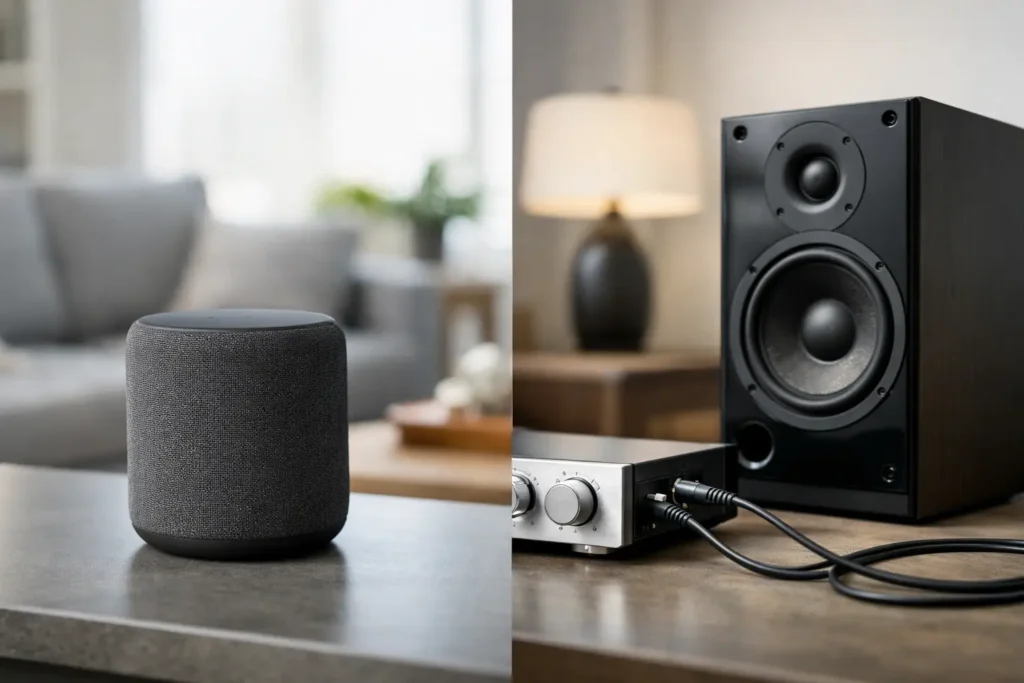
A beautiful television and premium speakers can still disappoint if the system is designed around the wrong connection method. When homeowners ask about wireless speakers versus wired, they are usually deciding between a cleaner-looking room and the proven performance of a traditional speaker system. The right answer depends on how you use the space, what you expect from your sound, and whether the home is being built, remodeled, or upgraded after the fact.
For a kitchen, patio, or casual living area, wireless can be an excellent fit. For a dedicated theater with Dolby Atmos, a wired system often earns its place. The goal is not to choose the newest technology. It is to build a system that sounds right, stays reliable, and fits naturally into your home.
Wireless Speakers Versus Wired: The Real Difference
A wired speaker receives its audio signal through speaker wire connected to an AV receiver or amplifier. In a home theater, that receiver powers and coordinates the front, center, surround, and overhead speakers. This setup gives the installer precise control over speaker selection, placement, power, and calibration.
Wireless speakers receive audio through WiFi, Bluetooth, or a proprietary wireless connection. Most are powered speakers, meaning each unit has its own built-in amplification. They may be easy to place in an existing room, but they still need electricity. “Wireless” usually means no speaker wire running back to the receiver, not no wires at all.
That distinction matters. A pair of wireless rear speakers may eliminate the need to run speaker cable across a room, yet each speaker may still need a nearby outlet. In some layouts, concealing one low-voltage wire is easier and cleaner than adding visible power cords or relying on extension cords.
When Wireless Speakers Make the Most Sense
Wireless audio is especially practical when convenience and flexibility are the priority. A homeowner may want music in the kitchen, bedroom, patio, or home office without adding a large receiver cabinet or opening walls. Multi-room systems make it simple to play the same playlist throughout the house or let each room play something different.
WiFi-based speakers are generally the better choice for whole-home music. They offer greater range and better stability than Bluetooth, particularly when the home network is properly designed. Bluetooth remains useful for quick personal listening, but it is not usually the best foundation for a multi-room audio system or a serious television setup.
Wireless speakers also work well in finished homes where running new wire would require drywall repair, extensive attic work, or changes to custom finishes. In a Newport Beach condo, a coastal home with detailed millwork, or a room that has already been fully furnished, the ability to add quality sound with minimal disruption can be a major advantage.
For many households, a wireless soundbar with a wireless subwoofer and rear speakers provides an enjoyable upgrade over TV audio. It can improve dialogue, add impact to movies, and reduce clutter compared with a full receiver-based system. The key is setting realistic expectations. It is a convenience-driven solution, not automatically a replacement for a carefully designed surround sound system.
Why Wired Speakers Still Lead for Home Theaters
A wired speaker system remains the standard for dedicated theaters, media rooms, and performance-focused living rooms. The reason is simple: it offers dependable communication, more system design options, and room to grow.
With a wired system, you can choose speakers that match the room rather than being limited to one manufacturer’s wireless ecosystem. You can install in-wall speakers for a clean finish, use bookshelf or floor-standing speakers for a more traditional look, or add in-ceiling speakers for Dolby Atmos effects. A quality AV receiver can then power, process, and calibrate the system as a unified whole.
Wired connections are also highly reliable. They are not affected by WiFi congestion, router placement, software updates, or interference from other wireless devices. This matters during movie night, a big game, or a presentation in a small office. A properly installed wired system simply performs when you turn it on.
Sound quality is another consideration, although the difference is not always as dramatic as marketing claims suggest. High-quality wireless speakers can sound excellent. Still, wired systems give more freedom to use larger drivers, separate amplifiers, dedicated subwoofers, and higher-output speakers. In larger rooms with vaulted ceilings, open floor plans, or multiple seating areas, that flexibility can make a noticeable difference in clarity and impact.
The Installation Trade-Off Is More Than Visible Wires
The biggest argument for wireless speakers is usually aesthetics. No homeowner wants speaker cable stapled along a baseboard or loosely tucked under a rug. But professionally installed wired speakers do not have to leave visible wiring behind.
During a remodel or new construction project, pre-wiring is often the smartest investment. Speaker wire can be run through walls and ceilings before drywall is closed, allowing for discreet in-wall, in-ceiling, or hidden equipment installations. It is far less expensive and less disruptive to plan this early than to retrofit the same system later.
In an existing home, there are still clean options. Wires can often be routed through attics, crawl spaces, cabinets, conduit, or carefully selected wall paths. Equipment can be centralized in a media cabinet, closet, or rack rather than sitting below the television. The result is a room that looks polished while retaining the reliability of a wired system.
Wireless systems reduce some installation labor, but they introduce their own planning needs. Speakers require outlets, the WiFi network must be strong where the speakers are located, and the components need to work well together. A weak signal near an outdoor patio or detached office can lead to dropouts, delays, or speakers that disappear from the app when you want to use them.
Consider Latency, Reliability, and Everyday Use
For background music, a brief delay is rarely a concern. For television, gaming, and surround sound, timing matters. If audio reaches one speaker later than another, the experience can feel disconnected. Modern wireless home theater systems are designed to manage timing, but their performance depends on the specific equipment and network conditions.
A wired receiver-based system handles audio synchronization directly through its connected components. It is typically the safer choice for immersive formats such as Dolby Atmos, where sound is meant to move precisely around and above the listener.
Reliability also has a practical side. Wireless products depend on apps, firmware, account setups, and network settings. Those features can be useful, but they can also create troubleshooting points. A wired speaker itself is a simple, durable component. If there is an issue, a technician can isolate whether the cause is the receiver, cable, speaker, or source device.
A Hybrid System Is Often the Best Answer
The choice does not have to be all wireless or all wired. Many of the best home systems use both.
A common approach is a wired surround sound system in the main living room or theater, paired with wireless speakers in bedrooms, the kitchen, and outdoor entertaining areas. Another option is a wired soundbar or TV audio connection combined with wireless rear speakers where running cable is difficult. Homeowners can keep the room’s primary movie experience dependable while adding convenient music control elsewhere.
This hybrid approach is particularly useful in larger Orange County homes, where different rooms have different needs. The family room may need strong, cinematic sound. The patio may need easy music control. A home office may only need clear audio for video calls. Each space deserves a solution based on how it is actually used.
How to Choose the Right Setup
Start with the room and your expectations, not the product box. If you want easy streaming in a finished room, wireless speakers may be the practical choice. If you are planning a remodel, building a dedicated theater, or want the most convincing surround sound, install speaker wire while access is available.
Also consider the strength of your home network. Wireless audio is only as dependable as the WiFi supporting it. If streaming buffers in parts of the home or smart devices regularly lose connection, a WiFi upgrade should be part of the audio plan rather than an afterthought.
A good system should feel simple after installation. You should not need to explain to every family member which app to open, which input to select, or why the rear speakers are offline. Thoughtful design, clean installation, and straightforward control matter as much as the speakers themselves.
The best audio system is the one that disappears into your routine: clear dialogue for a weeknight show, full sound for a movie, and music where you want it without clutter or frustration.
Ready for a free consultation? Let’s get in touch! Call (949) 878-0531 Today