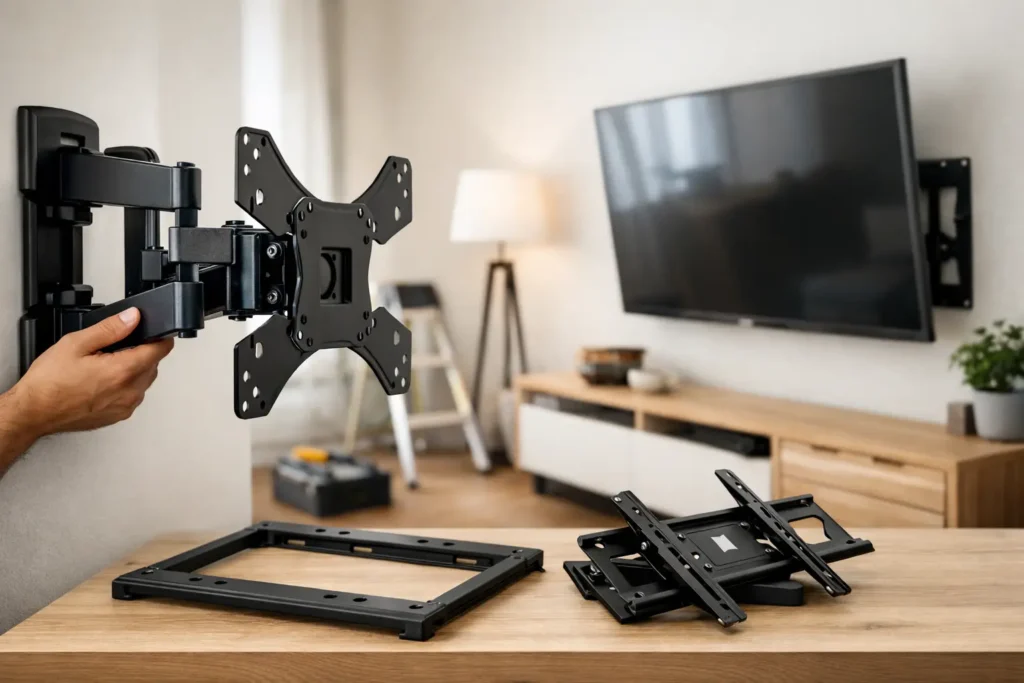
A TV can look perfectly placed in the store and feel completely wrong once it is on your wall. It may sit too high above a fireplace, catch glare from a Newport Beach window, or leave you craning your neck from the sectional. Choosing among TV wall mount types is not just about getting the screen off a console. It determines viewing comfort, room layout, cable access, and how clean the finished installation looks.
The best mount is usually the simplest one that solves the actual problem. A fixed mount may be exactly right for a dedicated media wall, while a full-motion model can be worth every inch of depth in an open-concept living room. Before buying a mount, consider where people sit, whether the TV needs to face more than one area, the wall construction, and how you will connect streaming devices, soundbars, and game consoles.
The Main TV Wall Mount Types
Most residential installations fall into four categories: fixed, tilting, full-motion, and ceiling mounts. There are also specialty options for corners, fireplaces, recessed walls, and outdoor spaces. Each has a practical place, but each creates different installation requirements.
Fixed mounts for clean, low-profile rooms
A fixed mount holds the TV flat and close to the wall. It is the cleanest-looking option and often the most affordable. When the viewing position is directly in front of the screen and the wall is at a comfortable height, there is little reason to add moving parts.
Fixed mounts work especially well in dedicated theater rooms, bedrooms, offices, and modern living rooms with a centered seating arrangement. They also keep a large TV close to the wall, which can make the screen feel more integrated with built-in cabinetry or a feature wall.
The trade-off is access. Once a TV is mounted tightly against the wall, reaching HDMI ports, power connections, or a streaming device behind it can be inconvenient. A proper installation plans those connections in advance, uses the right cable lengths, and leaves enough room for ventilation and future service.
Tilting mounts for higher TV placement
A tilting mount lets the bottom of the TV move slightly outward so the screen can angle downward. This is useful when the television must be placed above normal eye level, such as over a fireplace, on a bedroom wall viewed from a bed, or above built-in furniture.
That downward angle can reduce neck strain and improve picture visibility. It can also help limit reflections from overhead lighting or nearby windows. The adjustment range is usually modest, but that is often all a higher-mounted TV needs.
A tilt mount is not a cure for a TV mounted far too high. If the center of the screen is well above seated eye level, tilting helps but cannot make the position fully comfortable. In many Orange County homes, fireplaces create a design constraint, so it is worth reviewing alternate walls, mantel height, and seating distance before committing to an above-fireplace location.
Full-motion mounts for flexible viewing
Full-motion mounts, also called articulating or swivel mounts, extend outward from the wall and allow the TV to pivot left or right. Many also tilt. They are ideal when viewers sit in different areas of the room or when a screen needs to serve a kitchen, dining area, family room, or adjacent patio door area.
For example, a TV mounted in the corner of a great room may need to face the main sofa at night and angle toward the breakfast table during the day. A full-motion mount handles that flexibility without moving furniture.
These mounts need more care than fixed models. They are heavier, project farther from the wall, and place more leverage on the mounting points when extended. The wall must have suitable framing or a properly engineered mounting solution. Cables must also be long enough to move with the TV without pulling loose or getting pinched.
A quality full-motion installation should feel solid throughout its range of movement. The TV should remain level, move smoothly, and return to position without sagging. For larger screens, the weight rating and extension distance matter as much as the advertised screen-size range.
Ceiling mounts when wall space is limited
Ceiling mounts are a specialized choice for rooms where wall mounting is impractical. They can work in commercial spaces, covered outdoor areas, home gyms, converted garages, and rooms with extensive glass or cabinetry. Some models allow the screen to fold up when not in use.
The structure above the ceiling is the key consideration. A mount must be anchored into appropriate framing, not simply attached to drywall. Ceiling-mounted TVs also require a thoughtful plan for power, signal cables, and clean cable routing. This option can be highly effective, but it is rarely a do-it-yourself shortcut.
Specialty Mounts for Challenging Spaces
Some rooms require a mount built for more than a standard flat wall. Corner mounts use articulating arms to position a TV across an angled viewing area. Mantel mounts pull the TV down and forward from above a fireplace, bringing it closer to seated eye level when in use. Recessed mounts set the screen into a framed wall opening for a custom built-in appearance.
Outdoor-rated mounts are another category. They are designed to handle exposure better than indoor hardware, but the TV itself must also be suitable for the environment. Shade, heat, moisture, salt air, and security all affect the right solution for a patio or pool-area installation.
For a fireplace TV, heat deserves special attention. The wall may be structurally sound, but excessive heat can affect the television and connected equipment over time. Checking the fireplace’s heat output and measuring temperatures where the screen will sit is more useful than assuming every mantel location is safe.
How to Choose the Right Mount for Your TV and Room
Start with the viewing height. In most seated living-room setups, the center of the screen should land near eye level. There are exceptions, particularly with very large TVs, recliners, beds, and fireplaces, but comfort should guide the decision rather than a one-size-fits-all measurement.
Next, look at viewing angles. Modern TVs offer good off-axis viewing, but brightness, reflections, and color can still change when you are far to the side. If the room has multiple seating zones, a swivel mount may be the better investment.
Then verify compatibility. Your TV’s VESA mounting pattern, weight, size, and rear-panel layout all affect mount selection. Do not rely only on a package that says it fits a certain number of inches. A 75-inch TV can vary substantially in weight and mounting-hole placement from one model to another.
Finally, consider the full system, not just the screen. A soundbar may need a bracket that moves with the TV. A receiver, Apple TV, cable box, or gaming console needs a home with reliable ventilation and signal access. Concealed in-wall wiring should be code-appropriate and planned before the screen goes up. A clean wall is not just one without visible cords. It is one that remains easy to use and service.
Installation Details That Should Not Be Overlooked
A wall mount is only as secure as the surface behind it. Wood studs are common, but metal studs, masonry, tile, stone veneer, and plaster walls each require a different approach. Decorative materials can be especially misleading because what appears to be solid stone may be a thin finish over framing.
Mounting directly into drywall, using undersized hardware, or skipping stud verification can create a serious safety risk. Large TVs are expensive, and a falling TV can damage a wall, furniture, and anyone nearby. Professional installation becomes particularly valuable with oversized screens, fireplaces, full-motion mounts, difficult wall finishes, and hidden-wire requirements.
At Tri Star Home Theater, the goal is not to sell a more complicated mount than you need. It is to create a viewing setup that looks intentional, works reliably, and fits how your household actually uses the room. The right hardware, proper placement, and organized connections make the difference between a TV that is merely mounted and one that feels like part of the home.
A few extra minutes spent considering the room before installation can prevent years of glare, awkward viewing angles, and visible cables. The best choice should disappear into the room while making every movie night, game, and family gathering more enjoyable.
Ready for a free consultation? Let’s get in touch! Call (949) 878-0531 Today