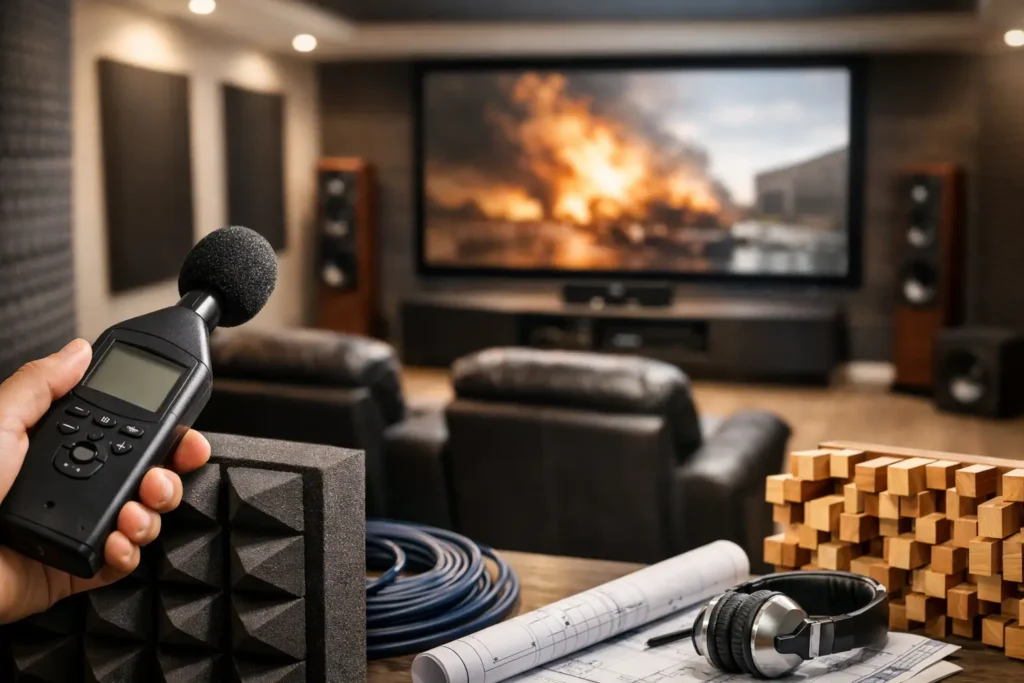
A great picture can still feel disappointing when the room sounds harsh, muddy, or uneven. If you are wondering how to improve home theater acoustics, the good news is that better sound usually comes from fixing the room, not just buying more gear. In many homes, the biggest problems are reflections, poor speaker placement, and bass that piles up in the wrong spots.
That is why two systems with similar equipment can sound completely different. One room gives you clear dialogue, smooth surround effects, and bass you can feel without the walls rattling. Another room turns every action scene into a blur of echoes and boom. The difference is acoustics.
How to Improve Home Theater Acoustics Without Guessing
Most homeowners start by turning settings up or swapping components. Sometimes that helps, but often it just masks the real issue. A home theater is a system, and the room is one of its most powerful parts.
Hard surfaces like glass, tile, and bare walls reflect sound. Large open floor plans can let sound escape in one direction while building up in another. Even attractive design choices, like minimalist furniture and tall ceilings, can make a room harder to control. That does not mean you need to turn your media room into a recording studio. It means you need to manage how sound moves.
The first place to look is speaker placement. If your left and right speakers are too wide, too narrow, or aimed poorly, the front soundstage can feel disconnected. If the center channel is buried in a cabinet or firing at your knees, dialogue will always struggle. Surround speakers that are too high, too low, or too close to seating can make effects feel distracting instead of immersive.
Subwoofer placement matters just as much. Bass is the part of the system most influenced by the room. In one seat, the low end may feel overpowering. Two feet away, it can almost disappear. That is why expensive subwoofers still sound disappointing when they are placed for convenience rather than performance.
Start With the Room Before You Upgrade Equipment
If your theater sounds bright, sharp, or echoey, the room is probably reflecting too much sound. Rugs, upholstered seating, curtains, and fabric wall elements all help absorb some of that energy. This is especially useful in rooms with hardwood floors, large windows, or lots of smooth painted drywall.
There is a balance, though. Too much absorption can make a room sound dull and lifeless. Too little can make it sound splashy and tiring. The goal is not to deaden the room. The goal is to control reflections so the direct sound from your speakers reaches you clearly.
A simple example is the first reflection point. When sound leaves your front speakers, some of it reaches your ears directly, and some bounces off nearby walls and ceilings before arriving a moment later. Those early reflections smear detail and reduce clarity. Acoustic panels placed at key reflection points can make a noticeable difference, especially for dialogue and front-stage imaging.
Ceilings are often overlooked. In many living-room theaters, ceiling reflections are a major reason the sound feels less focused than expected. This becomes even more important in Dolby Atmos systems, where height effects rely on careful timing and placement. If the ceiling is working against the system, those effects can feel vague rather than convincing.
The Most Common Acoustic Problems in Home Theaters
Boomy bass
Boomy bass usually comes from room modes, which are natural resonances created by the room’s dimensions. You may hear too much bass around certain notes and not enough around others. Turning the subwoofer down helps a little, but it also reduces the impact you actually want. Better placement, calibration, and in some cases multiple subwoofers are a smarter fix.
Muffled or weak dialogue
This problem is often blamed on the center speaker itself, but the real cause may be placement, cabinet interference, or reflections. A center channel should be aimed toward ear level and allowed to play without being boxed in. If voices still sound muddy, room treatment and calibration often solve more than a speaker replacement does.
Harsh or fatiguing sound
When a room has too many reflective surfaces, high frequencies bounce around aggressively. That can make movie soundtracks feel loud without sounding clear. It is a common issue in modern open spaces that look beautiful but give sound nowhere to settle.
Uneven sound from seat to seat
If one chair sounds great and the next one sounds off, your setup likely needs better speaker positioning, subwoofer integration, or room treatment. This matters for families and homeowners who entertain often. A theater should sound good across the seating area, not just in one perfect spot.
Practical Ways to Improve Home Theater Acoustics
The most effective changes are usually a combination of placement, treatment, and calibration. Start with your seating position. If your main row is pushed right against the back wall, bass problems are more likely. Moving seating forward even a foot or two can improve balance.
Next, evaluate your front speakers. They should form a balanced triangle with the main listening position and be angled appropriately. The center channel should not be blocked by furniture, décor, or shelving. Surround and Atmos speakers need to be placed according to the room layout, not just where it is easiest to run wire.
Then address the room itself. A large area rug between speakers and seating can reduce floor reflections. Window treatments can tame brightness in rooms with a lot of glass. Acoustic panels on side walls and rear walls often provide a bigger improvement than people expect, especially when they are positioned intentionally rather than scattered randomly.
Bass traps can also help, particularly in corners where low frequencies tend to build up. They are not always necessary in every room, but in dedicated theaters or bass-heavy spaces, they can tighten the low end and make the whole system sound more controlled.
After placement and treatment, calibration matters. Many modern receivers include room correction software, and it can be helpful, but automated systems are not magic. They can only work with what the room and speakers are already doing. If the basics are wrong, software may improve things slightly without truly fixing them.
When DIY Works and When It Doesn’t
There are plenty of improvements homeowners can make on their own. Moving speakers, adding a rug, closing reflective gaps with curtains, and adjusting furniture layout can all help. For a simple living-room setup, those steps may get you much closer to the sound you want.
But there is a point where guessing becomes expensive. If you are installing in-wall or in-ceiling speakers, designing a dedicated media room, or trying to blend performance with a clean upscale look, acoustic planning should happen before everything is mounted and wired. That is especially true when the room has unusual dimensions, open sides, high ceilings, or architectural features that affect sound.
This is where hands-on experience matters. A professional can identify whether the issue is speaker placement, subwoofer interaction, room reflections, or a combination of all three. They can also help you improve performance without filling the room with bulky treatment that clashes with the design of the home.
For many Southern California homeowners, that balance is the real challenge. You want the room to sound impressive, but you also want it to look polished and comfortable. The best acoustic solutions respect both.
How to Improve Home Theater Acoustics in Multipurpose Rooms
Not every home has a dedicated theater. Many systems are built into family rooms, bonus rooms, or open-concept living spaces. These rooms are more challenging because they serve different purposes and usually include more reflective surfaces and layout constraints.
In a multipurpose room, the right solution is often subtle. It may involve selecting speaker locations that work with the architecture, using furnishings to absorb reflections, and choosing low-profile acoustic treatments that blend into the space. Sometimes the better move is not adding more speakers but repositioning the ones you already have and dialing in the subwoofer correctly.
Clean installation also plays a role. When wiring, mounting, and equipment placement are handled thoughtfully, the system performs better and the room feels less cluttered. That is part of why custom setup matters. Acoustic performance is tied to the overall design, not just the electronics.
A theater should pull you into the movie, not remind you that the room is fighting the system. When the acoustics are right, dialogue becomes easier to follow, surround effects feel more natural, and bass has impact without becoming a distraction. You do not always need more equipment. You need the room and the system working together.
Ready for a free consultation? Let’s get in touch! Call (949) 878-0531 Today