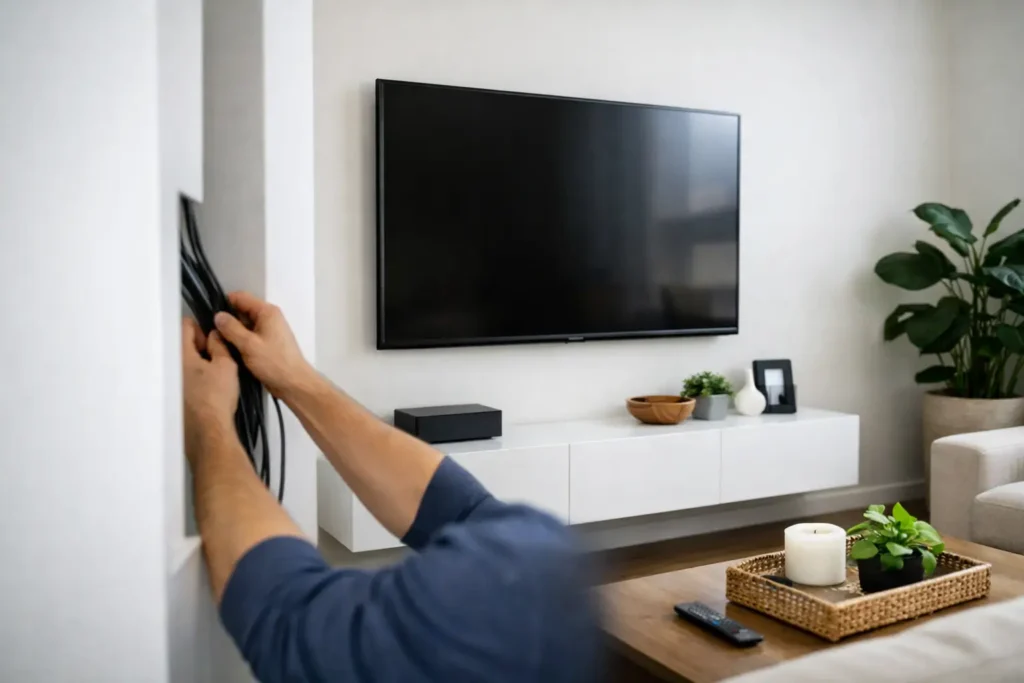
A beautiful TV wall can be ruined by one thing fast – a bundle of dangling cords. You can buy a great display, mount it perfectly, and still end up staring at power cables, HDMI lines, speaker wire, and network cords. If you are wondering how to hide TV wires without creating a safety issue or making future upgrades a headache, the right approach depends on your wall, your equipment, and how finished you want the final look to be.
Most homeowners want the same result: a clean setup that looks intentional, works reliably, and does not turn into a weekend project gone wrong. The good news is that there is more than one way to get there.
How to hide TV wires based on your setup
The first thing to figure out is whether your TV is mounted on the wall or sitting on a media console. A wall-mounted TV usually needs a more deliberate wire plan because the cables are visible from below and often run to devices in a cabinet. A TV on a stand is easier to manage, but visible cords can still make the room feel cluttered.
If your TV is mounted, you generally have three realistic options. You can use a paintable cord cover on the wall, run cables behind the wall with the correct in-wall rated materials, or place components directly behind the TV so fewer wires need to travel. Each option has trade-offs in cost, appearance, and difficulty.
If your TV sits on furniture, cable organization is usually less about construction and more about routing. In that case, hiding wires behind the console, bundling excess length, and keeping power separate from low-voltage lines often gets the job done without opening a wall.
The simplest option: cord covers
For many homes, a surface-mounted cord cover is the fastest and most practical solution. These slim channels attach to the wall and conceal the wires inside. Once painted to match the wall color, they tend to blend in better than most people expect.
This is a smart choice when you want a clean look without cutting drywall. It is also useful in condos, rentals, or spaces where opening the wall is not ideal. Cord covers work especially well when the TV is mounted above a console and the wires only need to run straight down a short distance.
The trade-off is that the cover is still visible if you look for it. It is cleaner, but not invisible. If you are aiming for a high-end built-in look, this may not be enough.
The cleanest look: in-wall wire concealment
If you want the TV wall to look polished and uncluttered, in-wall cable concealment is usually the best result. This method routes wires through the wall cavity so they disappear completely between the TV and the equipment location.
This is where many DIY projects get risky. Not every cable belongs inside a wall, and power has to be handled correctly. A common mistake is dropping a standard TV power cord through the wall. That is not the same as using a code-compliant power relocation kit or having an outlet installed in the right spot. Low-voltage cables like HDMI, speaker wire, Ethernet, and optical lines also need to be selected and routed properly.
Wall type matters too. Drywall over wood studs is one thing. Exterior walls with insulation, masonry surfaces, fireplaces, tile, and walls with fire blocking are another. The path that looks easy from the outside is not always easy inside the wall.
When done correctly, though, this approach gives you the cleanest finish and makes the TV feel integrated into the room instead of hung as an afterthought.
Don’t forget the power cord
When people search for how to hide TV wires, they are usually thinking about all the cables together. In practice, the power cord is the one that deserves the most caution.
HDMI and speaker wires are low-voltage. The power cord is not. That means you should not treat it like just another cable to tuck out of sight. If you want no visible power cord on a mounted TV, the proper solution is either a recessed outlet behind the TV or a listed power relocation system designed for this exact use.
This is one area where cutting corners can create real problems. It is not only about appearance. It is about safety, code compliance, and avoiding damage later.
What to do with streaming boxes, cable boxes, and game consoles
Hiding the wires is easier when you reduce how many wires need to move across the wall. That often means making a plan for your source devices before the TV goes up.
If your streaming box, cable box, or gaming system sits in a cabinet below the TV, you may need power, HDMI, network, and control paths between the two locations. If you place some components behind the TV, you can shorten that run significantly. This works well for compact streaming devices, but not always for larger cable boxes or game consoles that need ventilation and easy access.
Some homeowners also want a soundbar, surround sound receiver, or Sonos system tied into the setup. That changes the wire plan. A basic TV mount with one power cord is simple. A full entertainment setup with audio, control, and networking needs more foresight so you do not end up reopening the wall later.
How to hide TV wires above a fireplace
This is one of the most common requests and one of the trickiest. Fireplace walls often look perfect for a TV, but they can be challenging once you get into the details. Some have stone or tile surfaces. Some have limited wall cavities. Some have heat concerns. And many require longer cable paths to reach equipment stored off to the side.
A cord cover can still work in some cases, especially if the wall material makes in-wall routing impractical. But when homeowners want a clean, finished appearance above a fireplace, professional planning usually pays off. The visible part of the project is only half the job. The hidden part is what determines whether the system performs well over time.
A few mistakes that make the job look worse
The biggest visual mistake is leaving too much slack in the cables. Even if the cords are partly hidden, loops and bunching behind a console can still make the room look messy. Another common issue is mixing power and signal cables without any organization, which can make troubleshooting harder later.
There is also the problem of mounting first and planning second. Once the TV is on the wall, people often realize the outlet is in the wrong place, the HDMI cable is too short, or the soundbar wire still has nowhere to go. Good cable concealment starts before final mounting, not after.
And then there is future access. Completely hiding wires sounds great until you add a new device, replace a streaming box, or upgrade a receiver. The best installations are clean but still serviceable.
When DIY makes sense and when it does not
If you are dealing with a simple setup on a basic drywall wall, a cord cover and careful cable management may be all you need. That is a reasonable DIY project for many homeowners.
If you want wires fully hidden inside the wall, need a new outlet location, have a fireplace install, or plan to connect multiple devices with audio and networking, it makes sense to bring in a professional. That is especially true if you care about a premium finished look. A clean installation depends on more than getting wires out of sight. It depends on proper mount placement, signal reliability, safe power handling, and equipment layout.
That is where experience matters. A seasoned installer sees the obstacles before the wall is cut and can recommend a setup that works both visually and technically.
The best-looking TV wall starts with the plan
The cleanest rooms usually do not happen because someone found a clever way to tuck away a cord at the last minute. They happen because the wire path, power location, device placement, and mounting height were considered together from the start.
If you are investing in your living room, media room, bedroom TV, or office display, cable concealment is one of those details that changes the whole feel of the space. It makes the installation look finished, not improvised. And when it is done right, it also makes the system easier to use and easier to upgrade later.
Tri Star Home Theater helps homeowners across Orange County create TV setups that look clean, perform reliably, and fit the room instead of fighting it. Ready for a free consultation? Let’s get in touch! Call (949) 878-0531 Today