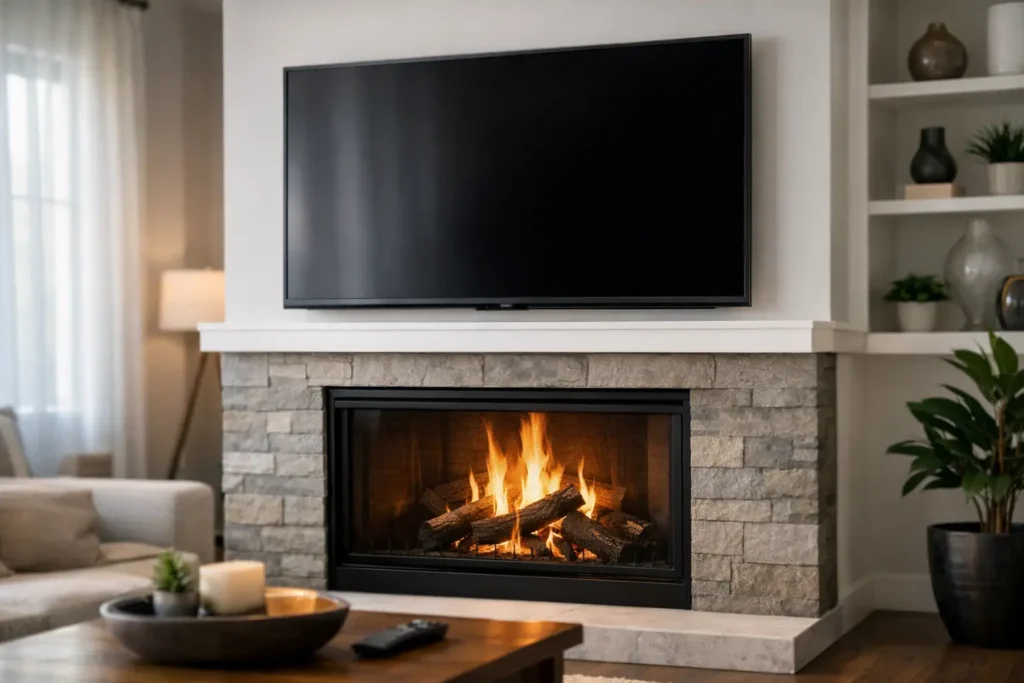
A lot of homeowners ask the same thing after finishing a remodel or rearranging the living room: can you mount tv over fireplace and still get a setup that looks clean, feels comfortable, and holds up over time? The short answer is yes, sometimes. The better answer is that it depends on heat, viewing height, wall construction, and how much you care about both performance and appearance.
This is one of those projects that looks simple from across the room. Once you get close, the details start to matter. A TV over a fireplace can be a smart use of space, but it can also create neck strain, heat exposure, glare, and cable problems if the wall is not planned correctly.
Can You Mount TV Over Fireplace Safely?
Yes, you can mount a TV over a fireplace safely if the area above the fireplace stays within the TV manufacturer’s temperature limits, the wall can support the mount and screen, and the viewing angle is reasonable. Those are the three big checks.
The first issue is heat. Fireplaces, especially older wood-burning units and some gas models, can push a surprising amount of heat into the wall cavity and the area directly above the mantel. Electronics do not like heat. If the space above the fireplace gets too warm during normal use, your TV may suffer reduced lifespan, performance issues, or warranty concerns.
A simple real-world test helps. Run the fireplace for a while at the setting you actually use, then place your hand where the bottom and center of the TV would sit. If that wall feels hot rather than mildly warm, it is a sign to slow down and measure more carefully. A mantel can help deflect heat, but not every mantel does the job equally well.
The second issue is structure. Mounting into drywall alone is not enough. Brick, stone, tile, and framed walls all require different hardware and installation methods. Fireplace walls are often more complicated than standard interior walls because they may hide masonry, metal studs, vents, or uneven surfaces.
The third issue is comfort. Even when a TV can physically go over a fireplace, that does not always mean it should. If the screen ends up too high, the room may look great in photos but feel awkward during a two-hour movie.
The Biggest Problem With TVs Over Fireplaces
In most homes, the main problem is not whether the mount will hold. It is viewing height.
For comfortable everyday watching, the center of the screen should usually land close to seated eye level. Over a fireplace, that center point often ends up much higher. The result is a constant upward viewing angle that can become tiring, especially in family rooms where people watch sports, movies, and streaming for long stretches.
This matters even more with larger TVs. A 65-inch or 75-inch screen mounted high can force you to tilt your head back more than expected. Some homeowners get used to it. Others regret it within the first week.
A pull-down fireplace mount can help in the right room. These mounts let the TV sit higher when not in use, then lower it to a more comfortable position for viewing. They are not perfect for every setup, and they add cost and mechanical complexity, but they can solve one of the biggest drawbacks of fireplace placement.
When Mounting a TV Over a Fireplace Makes Sense
There are situations where this setup works well.
If the fireplace is the natural focal point of the room and there is no better wall for the TV, mounting above it may be the cleanest layout. This is common in open-concept living spaces where windows, doors, and traffic flow leave limited options.
It also makes sense when the fireplace has a substantial mantel that blocks rising heat and the seating is set farther back. Distance helps. A higher TV is usually more tolerable when the sofa is not right on top of it.
Modern electric fireplaces can also be easier to work with than traditional wood-burning units, depending on how they vent and where they release heat. Some are designed to direct heat outward or downward rather than straight up. Even then, you still need to check actual operating temperatures, not assumptions.
For homeowners who care deeply about a clean finish, this location can deliver a very polished look when wires are concealed properly and the mount is matched to the wall material.
When You Should Avoid It
If the wall gets hot, that is the clearest reason to choose another location.
You should also think twice if the fireplace surround is made of brittle stone, delicate tile, or irregular stacked materials that make secure mounting harder. These surfaces can sometimes be drilled and anchored correctly, but they raise the difficulty level and leave less room for error.
Another red flag is a room where the fireplace is already too tall. Some newer homes have large decorative fireplace designs that place the mantel so high that the TV would end up near the ceiling. At that point, the look may be dramatic, but the viewing experience usually suffers.
And if you want a soundbar, in-wall wiring, streaming devices, or hidden power, the area above a fireplace can become crowded fast. A clean installation is still possible, but only with proper planning.
What to Check Before You Mount a TV Over a Fireplace
Before drilling anything, you want clear answers on a few points.
Wall type is first. Drywall over wood studs is very different from solid masonry, and stone veneer is different from full-depth stone. Each calls for a different anchoring approach. Guessing here is risky.
Power and signal access matter next. Most TVs need a nearby outlet, and many homeowners also want connections for a soundbar, cable box, Apple TV, Roku, gaming console, or network line. Extension cords hidden behind a wall-mounted TV are not a good solution. The cleaner and safer route is proper in-wall power and low-voltage planning.
Glare is another issue people miss. Fireplace walls often face large windows, especially in Southern California homes designed around natural light. A TV that sits over a fireplace may catch more daytime glare than one mounted on a side wall. You may be able to manage this with shades, screen choice, and angle adjustments, but it should be considered early.
Can You Mount TV Over Fireplace on Brick or Stone?
You can, but the surface changes the process.
Brick can usually support a properly installed mount very well, assuming the brick is in good condition and the anchors are placed correctly. Mortar joints are not always the best target, and drilling must be done carefully to avoid cracking or weak hold points.
Stone is less predictable. Natural stone can vary in thickness and stability, and manufactured stone veneer may not provide the same support as structural masonry behind it. Tile adds another layer of complexity because it can crack during drilling if the wrong bit or technique is used.
This is where experience matters. A good installation is not just about getting the TV on the wall. It is about choosing mounting points that will stay solid, sit level, and avoid damage to a finished surface that is expensive to repair.
Don’t Forget the Sound
A TV over the fireplace often places the screen in one spot and the best audio position in another. That creates a gap between what you see and what you hear.
Built-in TV speakers are rarely enough for a room with high ceilings, hard surfaces, or an active family area. A soundbar mounted directly below the TV can improve clarity, but spacing and wiring need to be thought through. In some rooms, a better answer is a properly placed left-center-right speaker layout or a discreet surround sound setup designed around the room rather than forced by the fireplace.
This is one reason homeowners sometimes call after a TV has already been mounted. The picture looks fine, but the room still does not feel right. Audio, height, and usability all have to work together.
The Best Approach Is to Plan the Whole Wall
If you are considering this layout, think beyond the mount itself. Measure heat. Sit in the actual seating position and look up at where the screen would land. Check where power comes from, where source devices will go, and whether you want a soundbar, recessed box, or cable concealment.
A fireplace wall can absolutely work. It just needs the right conditions and the right hardware. In homes throughout Newport Beach and Orange County, we have seen both outcomes – fireplace TV installs that look great and perform well, and others that create avoidable issues because no one checked the basics first.
If you want the room to feel clean, comfortable, and built for real use, treat the fireplace as one part of the system, not the entire decision. The best setup is the one that fits your room, your viewing habits, and your home’s construction.
Ready for a free consultation? Let’s get in touch! Call (949) 878-0531 Today