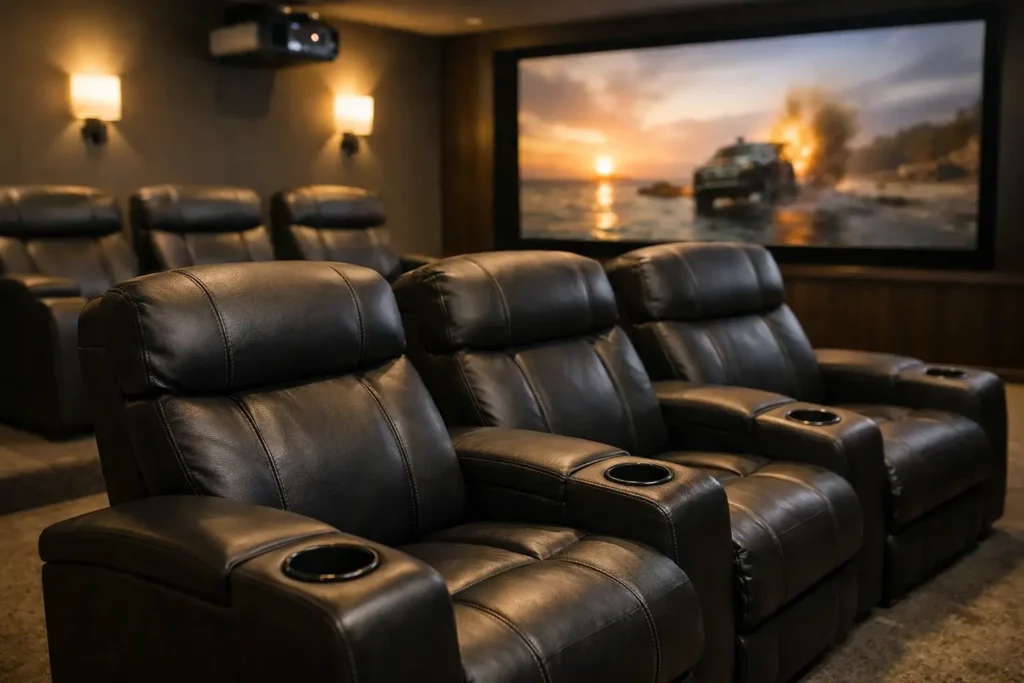
The screen gets most of the attention, but the seats decide whether you actually enjoy the room. A beautiful projector setup can still feel disappointing if the front row is too close, the back row has a blocked view, or the recliners are so large that walking through the room becomes awkward. That is why a solid home theater seating guide starts with comfort, sightlines, and how the room will really be used.
For some homeowners, that means a dedicated theater with two rows of recliners. For others, it means a media room that needs to handle movies, sports, gaming, and family hangouts without feeling overbuilt. The right answer depends on room size, screen size, speaker placement, and the number of people you want to seat comfortably on a regular basis.
What a home theater seating guide should help you solve
Good seating is not just about buying attractive chairs. It has to work with viewing distance, room traffic, and the overall design of the system. If the seats are oversized, they can interfere with surround speakers or leave too little room for a clean walkway. If they are too small or too upright, long movie nights become less enjoyable than they should be.
The first question is simple: is this a true theater room or a flexible media room? In a dedicated theater, you can prioritize symmetry, row spacing, risers, and a more immersive viewing angle. In a shared living space, the seating often needs to look refined during the day and still perform well at night. That changes the best layout.
There is also the question of how many seats you really need. Many people plan for the maximum number of guests they might host twice a year, then end up living with a crowded room every day. In most cases, fewer well-positioned seats create a better experience than squeezing in an extra chair or row.
Start with screen size and viewing distance
A seating plan should follow the screen, not the other way around. If you choose seats first, it is easy to back yourself into bad compromises with distance and sightlines. The main row should feel immersive without forcing people to move their heads across the image.
For large flat panels and projection screens, there is no single perfect number, but there is a practical range. Sit too far away and the picture loses impact. Sit too close and the image can feel overwhelming, especially with lower-quality content or fast action. A good setup puts the primary seats where movies look cinematic and everyday streaming still feels comfortable.
That is one reason professional planning matters. The right distance depends on resolution, screen size, room depth, and whether the system is geared more toward film viewing or general TV. A sports-focused family room often benefits from slightly more relaxed seating distance, while a dedicated theater can go more immersive.
One row or two?
Single-row seating is often the best choice when the room is modest in size. It keeps the layout simple, maintains clear speaker performance, and usually feels more open. A well-placed row of three or four seats can outperform a cramped two-row layout every time.
Two rows make sense when the room has enough depth to support them properly. That usually means enough space for front-row recline, safe walking clearance, and a rear riser high enough to create clean sightlines over the first row. If any one of those pieces is missing, the second row can feel like an afterthought.
The back row is often better as a straight row of theater recliners or a sofa-style option depending on the room. The front row is usually where dedicated recliners shine. It depends on the goal. If you host movie nights often, two rows can be a great fit. If the room is used daily by a smaller household, one excellent row may be the smarter investment.
Choosing the right seat style
Recliners are popular for a reason. They support long viewing sessions, often include cupholders and storage, and create that classic theater feel. But they are not always the best solution in every room. Some models require substantial wall clearance, and many are wider than homeowners expect once armrests and control panels are factored in.
A loveseat-style theater seat can help maximize capacity while keeping the room comfortable for couples or families. Chaise-style loungers can feel luxurious, but they need more depth. Sectionals can work well in media rooms, though they are harder to align with ideal sightlines and individual viewing positions.
The best seating style depends on how formal or casual you want the room to feel. Dedicated theaters usually benefit from seating that creates consistent positions across the row. Media rooms can be more relaxed. Neither approach is wrong, but the room should reflect how you actually live.
Spacing matters more than most people expect
This is where many projects go sideways. A seat may fit on paper but still feel wrong once installed. Reclining chairs need clearance in front and behind. Walkways need to be comfortable, not just technically possible. Armrests, tray tables, and curved row layouts all affect usable space.
A common mistake is underestimating the width of a full seating row. Another is forgetting that people need room to enter, sit down, and move around without disturbing everyone else. If you have ever had to turn sideways and shuffle past extended footrests, you already know the problem.
When a room also includes surround speakers, subwoofers, or acoustic treatments, spacing becomes even more important. Seats should not block speaker paths or force equipment into poor positions. The room needs to work as a system, not as separate purchases competing for square footage.
Sightlines, risers, and head placement
If you are planning multiple rows, sightlines deserve real attention. The back row should comfortably see the entire image without looking around the heads of the front row. That usually requires a riser, but the riser height should be calculated rather than guessed.
It is not just about seeing the bottom of the screen. You want a natural line of sight to the full image while keeping the viewing angle comfortable. Screen height, chair height, and the eye level of seated viewers all matter. Small changes on paper can make a noticeable difference in the finished room.
Head placement also affects audio performance. If a row is pushed too close to the back wall, surround effects can become uneven or too aggressive. If seats are placed directly under or in front of certain speakers, the sound field may feel less balanced. The goal is to place listeners where both video and audio perform the way they should.
Don’t ignore the room’s real-world use
The best home theater seating guide is honest about trade-offs. A dedicated theater can prioritize immersion. A family media room usually has to balance aesthetics, conversation, and day-to-day use. That may mean selecting lower-profile seating, preserving open floor space, or keeping access easier for kids and guests.
If the room gets natural light during the day, darker leather seats may look dramatic but show dust and heat more quickly. If young children use the room often, easy-clean materials may matter more than premium stitched details. If the theater is upstairs, getting oversized seating into the room may be a project in itself.
These are not small details. They affect whether the room stays enjoyable after the excitement of installation wears off.
Planning for wiring, lighting, and controls
Seating should be considered alongside everything else that supports the room. Power recliners need reliable outlet planning. Riser lighting, step lights, and under-seat illumination can improve safety and polish. If you want hidden wiring, tactile lighting scenes, and easy remote control, it is much easier to plan that before the seats arrive.
This is especially true in custom installations. Clean cable management, equipment placement, and lighting control all contribute to how refined the room feels. A well-designed theater is not just comfortable during the movie. It is also easy to use, easy to move through, and visually clean when the system is off.
For homeowners in Orange County investing in a theater or media room, this is often where experienced guidance saves money. The right plan helps avoid buying seating twice, rebuilding risers, or discovering too late that the room looked better on a showroom floor than it does at home.
A great theater seat should support the experience, not dominate the room. When the spacing is right, the view is clear, and the layout matches the way your household actually watches, the whole space feels easier and more enjoyable from day one. Ready for a free consultation? Let’s get in touch! Call (949) 878-0531 Today