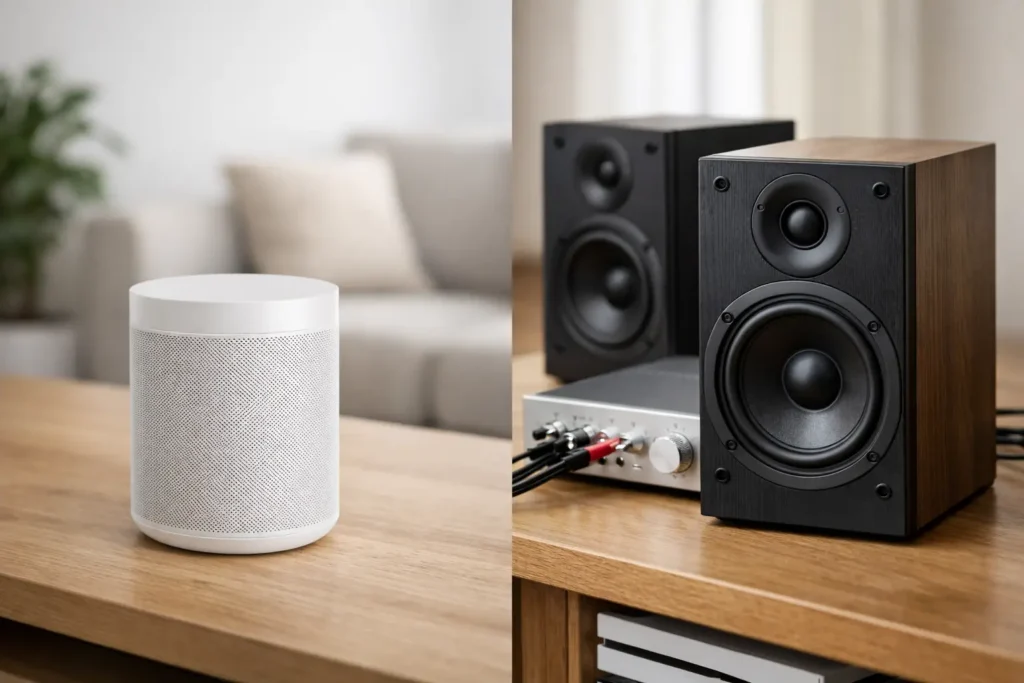
You usually feel the difference between Sonos and wired speakers before you can explain it. One system disappears into your daily routine with app control and fast setup. The other can make a movie night or listening session sound bigger, cleaner, and more effortless in the room. When homeowners ask about sonos vs wired speakers, the right answer is rarely about which one is better on paper. It is about how you actually use your home.
For some rooms, Sonos is exactly the right call. For others, a wired system is the better long-term investment. And in many homes, the smartest answer is a mix of both.
Sonos vs wired speakers in real homes
Sonos works well for people who want music in multiple rooms without opening walls, pulling speaker wire, or learning a complicated control system. If you want to add sound to a kitchen, patio, bedroom, or office with minimal disruption, Sonos has obvious appeal. The app is familiar, the product line is consistent, and expanding later is usually simple.
Wired speakers make more sense when sound quality, system stability, and clean integration matter most. In a dedicated media room, formal living room, or a large open-concept space, wired speakers paired with the right amplifier or receiver tend to deliver better dynamics, better channel separation, and more flexibility. You also have more control over speaker placement, equipment choices, and future upgrades.
That difference matters more than most people expect. A speaker system is not just an electronics purchase. It affects how the room looks, how easy it is to use, and whether you are happy with it five years from now.
Where Sonos makes the most sense
Sonos is strongest when convenience leads the decision. If your priority is simple streaming, multi-room audio, and a clean install without major construction, it checks a lot of boxes. That is especially true in finished homes where homeowners want better sound but do not want drywall work or visible wiring.
In casual listening spaces, Sonos often delivers exactly what people need. Background music in the kitchen, podcasts in the office, and TV sound in a family room are all good use cases. It also works well for households where multiple family members want to control music without dealing with remotes, receivers, or input switching.
Sonos can also be a smart fit for outdoor areas, guest spaces, and secondary rooms. If the goal is reliable audio with straightforward control, it keeps things simple. For many busy homeowners, simple is not a compromise. It is the point.
The trade-off is that convenience comes with limits. You are buying into an ecosystem. Product compatibility, app behavior, and feature changes depend on the platform. You also have fewer options if you want to fine-tune performance the way you can with traditional separate components.
Where wired speakers still win
Wired speakers still have the edge when performance is the main goal. For home theater, that advantage becomes obvious quickly. A properly designed wired surround system can create better impact, clearer dialogue, stronger bass integration, and more convincing immersion than most wireless-first setups.
This is especially true for larger rooms and for anyone who watches a lot of movies, sports, or live concerts at higher volume. Wired systems handle power and signal differently, and when the room and equipment are matched well, the result is more headroom and less strain. You hear the soundtrack open up instead of feeling like the system is working hard.
Wired speakers also offer better long-term flexibility. If you want to upgrade your front speakers but keep your subwoofer, or change your receiver without replacing the whole system, that is much easier in a traditional setup. You are not locked into one brand’s path.
There is also a reliability argument. While modern wireless audio is much better than it used to be, wired systems are still less dependent on WiFi conditions, software updates, and app ecosystems. In homes with weak network coverage or heavy device traffic, that can make a real difference.
Sound quality: the part people care about most
If the question is purely sound quality, wired speakers usually win. That does not mean Sonos sounds bad. In fact, for many rooms it sounds very good. But very good and best possible are not the same thing.
With wired speakers, you can choose larger cabinets, better drivers, stronger amplification, and more precise placement. All of those factors matter. A great speaker in the wrong place can underperform. A thoughtfully designed wired system gives you more ways to get placement and performance right.
Bass is another dividing line. Wireless systems can deliver respectable bass, especially when paired with a dedicated subwoofer. But a wired setup with a properly placed sub or multiple subs usually gives you deeper, more even low-end response. In movie rooms, that is not a small detail. It changes the whole experience.
Dialogue clarity is also worth mentioning. In many family rooms, homeowners think they need more volume when what they actually need is a better center channel and better system tuning. Wired setups often solve that problem more effectively.
Installation, aesthetics, and daily use
This is where the answer gets more personal. Sonos is easier to add, easier to move, and faster to get running. If you value speed and low disruption, that matters. You can often improve a room in a day without turning the house into a project.
Wired speakers ask for more planning. If you want in-wall or in-ceiling speakers, equipment racks, hidden subwoofers, and clean cable paths, installation matters as much as the products. The upside is a more tailored result. The system can look nearly invisible while performing at a much higher level.
For many Southern California homeowners, aesthetics are not optional. Clean lines, minimal clutter, and hidden wiring are part of the decision. A professionally installed wired system often wins on appearance because everything is designed around the room. At the same time, Sonos can be the more practical answer in finished spaces where opening walls does not make sense.
Daily usability matters too. Sonos is excellent for quick app-based control. Wired systems can be just as easy to live with, but only if they are configured properly. That may mean using a universal remote, a streamlined control app, or smart home integration so the system feels intuitive instead of technical.
Budget is not as simple as it looks
At first glance, Sonos can seem less expensive because you can buy one speaker at a time. That lowers the entry point. It is one reason people start with a soundbar or a pair of speakers and build from there.
But total cost depends on the goal. If you want whole-home audio in several rooms, Sonos can add up quickly. If you want theater-level performance, it may still fall short even after spending more than expected.
Wired systems vary more. A basic setup can be affordable, while a custom theater can be a major investment. The key difference is value over time. With wired systems, you often have more upgrade paths and more component choices, which can protect your investment better.
This is where professional planning helps. Buying piece by piece without a clear system design often leads to overspending, duplicate purchases, or performance that never quite matches the room.
Sonos vs wired speakers for different rooms
For kitchens, bedrooms, home offices, and casual outdoor areas, Sonos is often the cleaner answer. It gives you strong everyday performance with very little friction.
For media rooms, large living rooms, and dedicated theaters, wired speakers usually make more sense. That is where room size, seating distance, acoustics, and speaker placement start to matter more, and where a custom solution pays off.
For open-plan homes, a hybrid approach is often ideal. Use wired speakers where performance matters most, then use Sonos or Sonos-compatible zones in secondary spaces. That gives you flexibility without overcomplicating the entire house.
A lot of homeowners assume they need to choose one path for every room. They do not. The best system is often the one that matches the purpose of each space instead of forcing the whole property into one category.
The better question to ask
Instead of asking which system is best, ask what you want to feel when you use it. If you want simple music throughout the house with minimal fuss, Sonos is hard to beat. If you want the room to disappear and the sound to take over during a movie, wired speakers still set the standard.
At Tri Star Home Theater, we see both approaches work well when they are chosen for the right reasons. The problems usually start when people buy for marketing claims instead of room size, wiring options, listening habits, and long-term plans.
A good audio system should fit your home, not fight it. That may mean wireless convenience, wired performance, or a smart combination of both. The best result is the one that feels natural every day and still makes you smile when the volume goes up.
Ready for a free consultation? Let’s get in touch! Call (949) 878-0531 Today