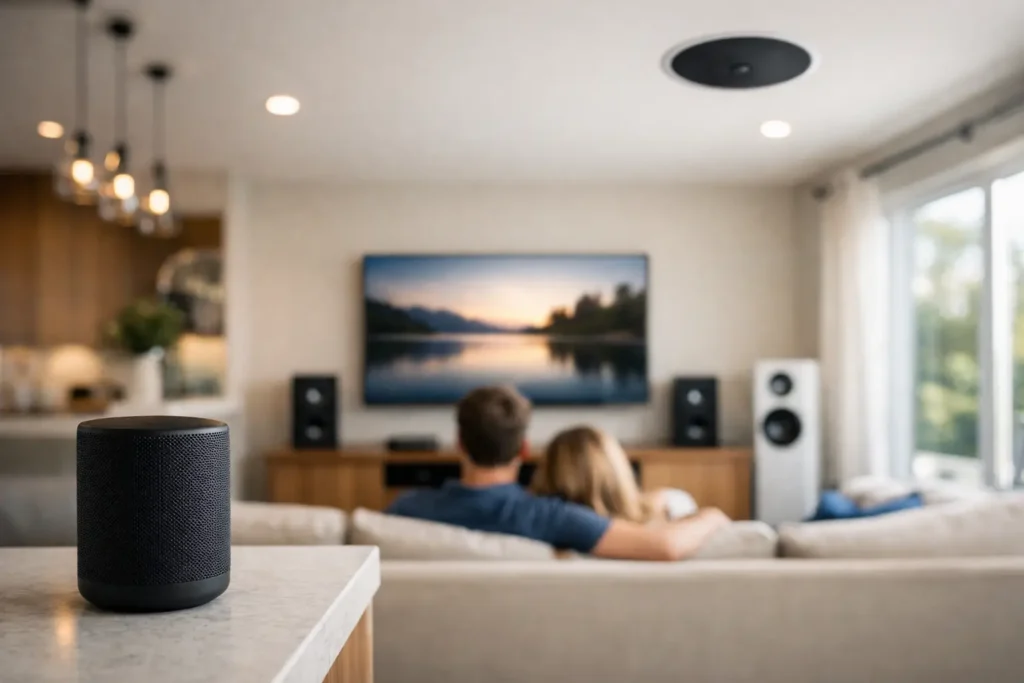
Music sounds very different when it belongs to the house instead of one room. You start coffee in the kitchen, walk to the patio, head upstairs, and the sound follows without getting louder, thinner, or annoying. That is where a smart whole house audio guide helps – not by pushing the most expensive gear, but by helping you choose a system that fits how you actually live.
For some homeowners, that means soft background music in the main living areas. For others, it means entertaining outdoors, giving teenagers their own listening zones, or keeping the family room and kitchen connected during gatherings. The best setup is rarely the one with the most speakers. It is the one with the right layout, reliable control, and clean installation.
What a whole house audio guide should help you decide
A true whole-home audio system is built around zones. A zone is simply an area that can play music independently or in sync with other areas. Your kitchen and family room may work well as one shared zone, while the primary bedroom, patio, and office often make more sense as separate zones.
This matters because it affects everything else – speaker placement, wiring, amplification, app control, and budget. If every room needs different music at different times, the system design gets more involved. If most of the house usually listens together, you can simplify the layout and keep costs more controlled.
A good plan also accounts for how the home is built. Open-concept layouts behave differently than homes with enclosed rooms. High ceilings, tile floors, and large glass doors can make audio sound bright or echo-heavy. In those cases, speaker quantity is not the answer by itself. Placement and tuning matter just as much.
Wired vs wireless in a whole house audio guide
One of the biggest decisions in any whole house audio guide is whether to go wired, wireless, or hybrid. There is no universal right answer.
A wired system is often the best choice during new construction, remodeling, or any project where walls are already open. It gives you strong long-term reliability, hidden infrastructure, and more flexibility for in-ceiling and in-wall speaker layouts. It also tends to look cleaner because the core equipment can live in a closet, media cabinet, or rack instead of being visible in every room.
Wireless systems are attractive because they reduce disruption. They work well in finished homes where you want quality audio without opening drywall throughout the property. They are also easy to expand one room at a time. That said, wireless does not mean no planning. These systems still depend heavily on stable WiFi, good power access, and smart product selection.
For many Southern California homeowners, the best answer is hybrid. Main living spaces and outdoor areas may benefit from hardwired speakers, while guest rooms, offices, or secondary spaces use app-based wireless components. That approach balances performance, appearance, and cost without forcing the entire home into one category.
Choosing the right speakers for each room
Not every room needs the same type of speaker, and treating the whole house as one identical speaker plan usually leads to disappointing results.
In-ceiling speakers are popular because they stay out of sight and work well for distributed music. They are a strong fit for kitchens, hallways, bedrooms, and other spaces where clean aesthetics matter. In-wall speakers can offer a bit more directional control, which can help in certain rooms. For media-heavy spaces like a family room or dedicated TV area, traditional surround sound speakers or a properly designed soundbar setup may still be the better choice.
Outdoor audio deserves special attention. Patio and backyard systems fail all the time because they were underpowered, poorly placed, or simply not built for weather exposure. Exterior speakers should be positioned to cover the listening area evenly instead of blasting the yard from one corner. That usually sounds better and keeps volume more neighbor-friendly.
Bathrooms, garages, and small flex spaces can be worth including too, but not always. If a room will only be used occasionally, it may make more sense to prepare for audio with wiring and back boxes now, then add speakers later.
Control is where convenience either happens or falls apart
The audio itself gets most of the attention, but control is what determines whether you enjoy the system every day. If the interface is clunky, family members stop using it.
Most homeowners want simple app control from a phone or tablet. That makes sense, especially for selecting music services, grouping zones, and adjusting volume quickly. But apps are not the only option. Wall keypads, handheld remotes, and smart home integration can all make sense depending on the home and the users.
There is also a practical side to control that people often miss. Do you want guests to be able to play music easily? Do you want children to have access to some zones but not others? Should the patio volume be limited? Do you want music to start with one tap when entertaining? Those details shape the system as much as the speakers do.
A family-owned installer with hands-on experience will usually spend more time on these everyday use questions than a big-box seller focused on product bundles. That part of the process matters because the right control setup should feel natural from day one.
Don’t ignore the network
A modern audio system is only as dependable as the network supporting it. If your WiFi drops in the back bedroom or gets weak near the patio, wireless audio will expose that problem fast.
This is especially common in larger homes, remodels with added square footage, and properties with outdoor entertainment areas. Streaming audio can seem simple until multiple zones are running at once, phones are controlling playback, TVs are streaming, and security devices are also using bandwidth. That is when weak access point placement and outdated routers start showing up.
Before installing a wireless or hybrid audio system, it is worth looking honestly at network coverage. Sometimes the fix is minor. Other times the home needs a more thoughtful WiFi upgrade so music plays consistently where you need it.
Budgeting without overspending
The easiest way to overspend on whole-home audio is to overbuild rooms that do not need much attention and underbuild the spaces that matter most. A better approach is to prioritize the areas where the system will actually get daily use.
For one household, that may be the kitchen, great room, and patio. For another, it may be the primary suite, office, and outdoor lounge. Start with the highest-value zones, choose equipment that can expand, and leave room for future growth.
It also helps to budget beyond just speakers. Amplification, source devices, control hardware, wiring, network improvements, and labor all affect final cost. Clean installation has value too. Hidden wires, properly aimed speakers, organized equipment, and dependable setup are not extras if you care about how the home looks and how the system performs over time.
When professional design makes the biggest difference
Some audio projects are straightforward. Others look simple until the details pile up. Vaulted ceilings, plaster walls, outdoor zones, integrated TV audio, equipment closets, and spotty WiFi can turn a basic music plan into a frustrating patchwork if it is not designed properly.
That is where experienced local help makes a real difference. A professional installer can map zones, recommend realistic speaker counts, identify network limitations, and match the system to both the home and the homeowner. More importantly, they can keep the project from becoming a mix of mismatched products that are hard to use and harder to service later.
In homes across Newport Beach and surrounding Orange County communities, that local experience often saves money in the long run because the system is designed correctly the first time. At Tri Star Home Theater, that practical approach is a big part of the value – not just installing equipment, but making sure the system works the way a family wants to use it.
If you are planning a remodel, moving into a new home, or trying to upgrade an older setup that never quite worked right, the best next step is not guessing at products. It is starting with a clear plan for sound, control, coverage, and future flexibility.
Ready for a free consultation? Let’s get in touch! Call (949) 878-0531 Today